Dr. Phillips Charities Microgrant Program (2026): Eligibility, Application Process & Funding Opportunities

Blog Dr. Phillips Charities Microgrant Program (2026): Eligibility, Application Process & Funding Opportunities July 24, 2026 No Comments Emily Carter Dr. Phillips Charities $5,000 Microgrant Program The Dr. P. Phillips Legacy Microgrant Program, part of the Dr Phillips Charities microgrant initiative, awards $5,000 microgrants to 15 nonprofit organizations in Orange and Osceola Counties with annual budgets of $2 million or less. Eligible nonprofits working in Arts & Culture, Children & Youth, Education, Health, or Social Services can apply through the Dr. Phillips Grant Portal before the August 7, 2026 deadline. This guide covers everything you need to know about the Dr. P. Phillips Microgrant Program: What Is the Dr Phillips Charities Microgrant Program? About Dr Phillips Charities Why the Program Matters What Does the Microgrant Program Fund? Who Can Apply? (Eligibility Checklist) Who Should Not Apply Dr. Phillips Charities Funding Amounts How to Apply for Dr Phillips Charities Smallgrant Program Why Work With a Professional Grant Writing Company? Application Timeline Tips to Improve Your Chances Common Mistakes Applicants Make Dr Phillips Charities Microgrant Program vs. the Standard Grant Program Frequently Asked Questions Supporting Grassroots Organizations Through Microgrants Many grassroots organizations in Central Florida have strong ideas for community impact but limited dollars to launch them. That gap is exactly what the Dr Phillips Charities Microgrant Program was created to close. Formally known as the Dr. P. Phillips Legacy Microgrant Program, this community grant program was launched in honor of Dr. Phillips’ 150th birthday to celebrate the legacy of the Phillips family while extending fresh grant funding to smaller nonprofit organizations. Community funding like this matters because philanthropy at the local level fuels youth development, education support, healthcare access, and social services in neighborhoods that need it most. Microgrants, in particular, give grassroots organizations and local organizations a realistic entry point into institutional funding, one that doesn’t require the scale of a major capital campaign. What Is the Dr Phillips Charities Microgrant Program? The Dr Phillips Charities Microgrant Program, also called the Legacy Microgrant Program, is a Central Florida philanthropy initiative from Dr. Phillips Charities. It provides microgrant funding to nonprofit organizations that are too small to be an easy fit for the organization’s larger, invitation-only grant process. The program honors the legacy of the Phillips family and their long-standing commitment to Central Florida. About Dr Phillips Charities Dr. Phillips Charities is comprised of Dr. Phillips, Inc. and The Dr. P. Phillips Foundation. Together, these entities operate under the motto “helping others help themselves,” guiding decades of charitable giving across Central Florida. Dr. Phillips Charities considers grants with a significant and lasting impact on the region, including capital projects and innovative programs that address critical community needs. Why the Program Matters Local economic growth and community resilience depend on organizations that understand their neighborhoods best. The Legacy Microgrant Program strengthens community development by directing funding support toward organizations already doing the work, helping them stabilize operations, pilot new ideas, and demonstrate measurable impact that can attract larger funders down the road. What Does the Microgrant Program Fund? Dr. Phillips Charities’ giving areas for this program include: Arts & Culture Children & Youth Education Health Social Services Priority consideration is given to projects that reduce economic pressures on ALICE (Asset Limited, Income Constrained, Employed) households and low-income families. Who Can Apply? Eligibility Checklist Organization is a nonprofit with an annual operating budget of $2 million or less Located and actively operating in Orange County or Osceola County, Florida Programs fall within one of the five giving areas listed above Able to create an account and complete a profile in the Dr. Phillips Grant Portal Able to submit online before the application deadline Who Should Not Apply Organizations located outside Orange and Osceola Counties are not eligible to apply. Organizations with budgets exceeding $2 million are not a fit for this specific program. Individuals are not eligible applicants. Organizations whose work does not fall within the five designated giving areas are not eligible. Always verify the latest exclusions and eligibility requirements on the official site before applying. Funding Amounts Detail Amount Award per organization $5,000 Total organizations funded 15 Eligible organizational budget $2 million or less annually How to Apply Step 1: Research Eligibility Research eligibility against the program’s five giving areas and county requirements. Use grant finding services to discover relevant funding opportunities, review eligibility requirements, and identify programs that best match your organization’s goals and needs. Step 2: Prepare Documents Prepare organizational documents, including your nonprofit status and budget information. Step 3: Develop Proposal Develop a compelling project proposal tied to a clear community need. Leverage grant proposal writing services to craft a strong grant narrative, highlight your community impact, and create a proposal that effectively supports your funding goals. Step 4: Create Budget Create a realistic budget that matches the $5,000 award scope. Step 5: Complete the Application Complete the application in the Dr. Phillips Grant Portal by answering the microgrant question. Step 6: Review Before Submission Review before submission for completeness and accuracy. Step 7: Submit Application Submit through the official grant portal before the deadline. Use grant submission support to review submission requirements, and ensure your grant materials are complete and submitted accurately before the deadline. Why Work With a Professional Grant Writing Company? Preparing a successful grant application requires more than completing an online form. Funders want to understand the community need, the purpose of the project, how funds will be used, and what measurable results the organization expects to achieve. A well-written proposal helps demonstrate organizational readiness, project impact, and alignment with the funder’s goals. A professional grant writing company can help nonprofit organizations develop stronger applications by providing guidance throughout the grant process. Experienced grant professionals can assist with: Eligibility review: Evaluating whether your organization, project, and funding request meet the grant requirements. Grant research: Identifying funding opportunities that match your mission, programs, and community priorities. Proposal development: Creating clear and compelling narratives that explain the need, project activities, and expected outcomes. Budget preparation:
Google Ad Grants 2026: Eligibility Requirements, Application Process, Management, and Best Practices

Blog Google Ad Grants 2026: Eligibility Requirements, Application Process, Management, and Best Practices July 7, 2026 No Comments Michelle Bennett What Are Google Ad Grants? (Quick Answer) Google Ad Grants gives eligible 501(c)(3) nonprofits up to $10,000 per month in free search advertising on Google.com. Qualifying organizations apply through Google for Nonprofits, verify their status, and build a compliant Google Ads account. Ongoing success depends on compliance, campaign optimization, and quality website content. This guide covers everything you need to know about the Google Nonprofit Ad Grants: What Is Google Ad Grant? Benefits of Google Ad Grants Eligibility Requirements Who Is NOT Eligible? How to Apply for Google Ad Grants Real-World Google Ad Grants Success Stories Google Ad Grants Compliance Requirements Google Ad Grants vs Standard Google Ads Frequently Asked Questions Understanding Google Ad Grants Nonprofit marketing has become more competitive every year. Donors, volunteers, and supporters have more causes competing for their attention, and organic reach on social platforms keeps shrinking. Search remains one of the few channels where a nonprofit can appear right when someone is actively looking for a cause like theirs. That’s where Google Ad Grants comes in. This program provides free advertising for nonprofits, giving eligible organizations real visibility on Search Engine without competing purely on budget. But receiving the grant is only step one. Poor account setup, weak keyword targeting, and ignored compliance rules are the most common reasons Ad Grants accounts get suspended or underperform. What Is Google Ad Grant? Google Ad Grants is an in-kind advertising program, part of the broader Google for Nonprofits suite, that gives qualifying nonprofit organizations advertising credits to run Ad campaigns. Rather than paying per click like a standard Ads account, approved nonprofits receive up to $10,000 per month in free advertising for search ads shown on Google.com. The core difference between standard Ads and Google Ad Grants is funding and account rules. Standard Google Ads is a paid platform open to any advertiser with no restrictions on ad type. Google Ad Grants is free, but limited to text-based search ads and subject to stricter compliance standards, including minimum click-through rate and keyword quality requirements. Nonprofits use their Ad Grants account to reach people actively searching for causes, services, or resources related to their mission, connecting supporters to landing pages built to convert. Benefits of Google Ad Grants A well-managed Google Ad Grants account can support several nonprofit growth goals at once: Increase website traffic from people actively searching for your mission Support donation campaigns by driving traffic to giving pages Aid volunteer recruitment through targeted search ads Build awareness campaigns for programs, events, or advocacy work Strengthen community outreach in specific regions Generate leads for newsletters, intake forms, or service requests Results vary by organization. A grant account’s impact depends on website quality, campaign structure, and ongoing optimization, not the grant alone. Ad Grants Eligibility Requirements Eligibility is determined by Google and its verification partners. In general, an organization must: Eligibility Checklist Hold current 501(c)(3) status (or equivalent charitable registration outside the U.S.) Register for a Google for Nonprofits account and pass verification Agree to Ads policies and the Ad Grants program terms Maintain an active, functioning website with clear content about the mission Not discriminate in the provision of services or membership Churches and houses of worship are typically eligible once they’ve secured formal 501(c)(3) recognition, since they’re tax-exempt by default but not automatically registered as a 501(c)(3). Who Is NOT Eligible? Certain organization types are excluded from the standard Ad Grants program: Not Eligible Government entities or agencies Hospitals and healthcare institutions Schools, colleges, and universities (though an affiliated 501(c)(3) foundation may qualify separately) Always verify the latest eligibility rules on Google’s official website before applying, since requirements can change. How to Apply for Google Ad Grants Step 1: Register for Google for Nonprofits Register for Google for Nonprofits and submit your organization for verification. Step 2: Check Eligibility Confirm eligibility against Google’s published criteria for your country. Step 3: Wait for Approval Wait for verification approval, which arrives by email once your nonprofit status is confirmed. Step 4: Activate the Ad Grants Activate the Ad Grants product from your Google for Nonprofits dashboard. Step 5: Build your Ads Account Structure Build your Google Ads account structure, campaigns, ad groups, keywords, and Responsive Search Ads. Step 6: Set up Tracking Set up conversion tracking before launch so results can be measured from day one. Step 7: Submit for Account Review Submit for account review and launch campaigns once approved. Approval timelines vary and are not guaranteed on any fixed schedule, so plan campaign launches with flexibility. Real-World Google Ad Grants Success Stories Seeing how other nonprofits have used the program can help set realistic expectations. These examples are drawn from published case studies and show what’s possible with strong conversion tracking and account management, though results always depend on each organization’s website, budget goals, and mission fit. DonorsChoose.org (education): Built a Google Ad Grants account around multiple conversion goals, including donations, teacher registrations, and project submissions. Over one year, the account drove roughly 305,000 site visits and thousands of donations, supported by conversion tracking across Google Ads and Google Analytics. Days for Girls (global health/education): Worked with a digital marketing agency to layer conversion tracking and Smart Bidding onto their Ad Grants account, generating dozens of online donations in a two-month period with a strong average donation value. We Care Animal Rescue (animal welfare): Used Smart Campaigns and geo-targeting to promote a new website locally, reporting a large jump in online activity and adoption applications after launch. SOS Children’s Villages (child welfare, India): Adopted Google’s Recommendations tab and ongoing keyword additions to grow monthly site visits substantially while generating consistent monthly donations. Samaritans (mental health support, UK): Paired their Ad Grants account with conversion tracking across donations, volunteer sign-ups, and event registrations, and later added a paid Ads account during high-demand periods to extend reach. Federation of Canadian Artists (arts and culture): Used
Truist Foundation Grants: Eligibility, Application Steps, and Funding Opportunities (2026 Guide)

Blog Truist Foundation Grants: Eligibility, Application Steps, and Funding Opportunities (2026 Guide) July 4, 2026 No Comments GWC Quick Answer: What Are Truist Foundation Grants? Truist Foundation grants are corporate philanthropy awards for U.S.-based 501(c)(3) public charities working in two pillars: building career pathways to economic mobility and strengthening small businesses. Eligible nonprofits apply through an online application during one of three annual grant cycles, and awards are based on program strength, community impact, and alignment with Truist Foundation’s mission. This guide covers everything you need to know about the Truist Foundation grant: What Are Truist Foundation Grants? Truist Foundation Funding Priorities Who Is Eligible for Truist Grants? Types of Projects That Receive Funding How to Apply for Truist Foundation Grants: Step-by-Step Why Professional Grant Writing Services Matter Grant Application Requirements Tips to Increase Approval Chances Common Mistakes Applicants Make Alternative Corporate Foundation Grants Frequently Asked Questions Why Truist Foundation Grants Matter for Nonprofits Grant funding is one of the most important resources a nonprofit organization can secure. As government funding tightens and community needs grow, corporate philanthropy has become a critical bridge for nonprofit organizations, educational institutions, and community organizations working to expand programs and deepen community impact. Foundation grants like those offered through the Truist Funding Program give nonprofits the funding support needed to launch initiatives, strengthen infrastructure, and reach underserved communities. Demand for nonprofit funding continues to rise, and grant opportunities from corporate foundations are more competitive than ever. Organizations that approach the grant application process strategically, with clear objectives, measurable outcomes, and strong alignment to a funder’s priorities, are better positioned for success. What Are Truist Foundation Grants? The Truist Foundation is the charitable giving arm connected to Truist Financial Corporation, though its giving budget and decisions are independent of Truist Financial Corporation’s business operations. Truist Foundation supports nonprofit organizations that serve adults and align with two key areas of focus: Building career pathways to economic mobility: Helping frontline and unemployed workers access reskilling, upskilling, and employment navigation resources. Strengthening small businesses: Expanding access to capital, technical assistance, and business networks for entrepreneurs, particularly minority-owned businesses and women-owned businesses. Truist Foundation also invests in disaster recovery and other community priorities, though some of these opportunities are reviewed only by invitation. Grantmaking generally supports program launches, curriculum expansion, equipment, and select capital needs rather than ongoing operational costs. Truist Foundation Funding Priorities Truist Foundation’s key areas of focus are intentionally narrow, which allows the foundation to build deeper, longer-term relationships with grant recipients. Funding priorities include: Workforce development and workforce training that build career readiness for adults Financial literacy and financial empowerment programs Economic mobility and economic opportunity initiatives Small business support, including access to capital and mentorship Community development and neighborhood-level capacity building Select disaster recovery and community resilience work (largely invitation-based) These priorities matter because they shape which nonprofit grants get funded. A strong grant application clearly ties a program’s goals to one of these two pillars rather than describing general operating needs. Who Is Eligible for Truist Foundation Grants? Eligibility Factor Requirement Tax status Must be a 501(c)(3) organization classified as a public charity under IRC 509(a)(1), 509(a)(2), or (for functionally integrated organizations only) 509(a)(3) Location Must be U.S.-based Legal compliance Must comply fully with the USA Patriot Act Program fit Must align with one of the two Foundation pillars Population served Programs generally must serve adults Organizations that typically do not qualify include private foundations individuals political organizations most religious organizations Private K-12 schools generally don’t qualify unless most students come from low- to moderate-income households. Local governments and educational institutions may be eligible depending on program structure, but should confirm fit before applying. Always verify the latest eligibility requirements and funding priorities on the official Truist Foundation website before applying, since qualifying and ineligible categories can be updated. Grant Amounts Truist Foundation grants typically range from $5,000 to over $3,000,000, depending on the scope, scale, and impact of the proposed program. Local and regional investments generally start at around $15,000. Final award amounts vary based on program alignment with the Foundation’s funding priorities, organizational capacity, and demonstrated community impact. Types of Projects That Receive Funding Based on Truist Foundation’s published guidance, funded projects have included: Workforce training and career navigation programs Small business ecosystem support, including access-to-capital initiatives Curriculum expansion for existing adult-serving programs Equipment purchases needed to deliver a program Select capital campaigns, generally considered once a campaign has reached roughly 60% of its fundraising goal Always verify the latest funding priorities and eligibility requirements on the official Truist Foundation website before applying, as funded project types can shift between cycles. How to Apply for Truist Foundation Grants: Step-by-Step Roadmap Step 1: Check Eligibility Review eligibility against the 501(c)(3) and pillar requirements above. Step 2: Choose One Pillar Choose one pillar: economic mobility or small business support, this even if your work touches both. Step 3: Gather Documents Gather organizational documents, including board list and program budget. Step 4: Define Project Objectives Define project objectives tied directly to the chosen pillar. Step 5: Demonstrate Community Impact Build measurable outcomes showing expected community impact. Step 6: Prepare Budget Prepare a program budget distinguishing new/expansion costs from operating expenses. Step 7: Write Grant Proposal Write the grant proposal that clearly explains the project’s need, proposed approach, and evaluation plan. If additional expertise is required, professional grant proposal writing services can enhance the proposal’s clarity, competitiveness, and compliance with funding guidelines. Step 8: Check Regularly Reply quickly to any additional information requests during the review process. Step 9: Plan for Reporting Plan for reporting if awarded, including grant agreement signature and MEL (Monitoring, Evaluation, and Learning) updates. Why Professional Grant Writing Services Matter Many well-managed nonprofit organizations still find it challenging to turn successful programs into compelling grant applications. Grant writing services support organizations by: Reviewing eligibility and funding priorities before an application is submitted Structuring a project narrative that maps to a funder’s stated pillars Building budgets that meet funder expectations Strengthening
Lululemon Community Wellbeing Grant: Eligibility Requirements, Application Steps, and Funding Options for Nonprofit Organizations

Blog Lululemon Community Wellbeing Grant: Eligibility Requirements, Application Steps, and Funding Options for Nonprofit Organizations July 4, 2026 No Comments Michelle Bennett Understanding Lululemon Community Wellbeing Grant The Lululemon Community Wellbeing Grant is an annual application-based grant program that provides funding to community-led nonprofit organizations advancing equitable access to movement and mindful programming. Eligible nonprofits and charitable organizations in approved countries may request funding of up to $50,000 USD. Projects focused on physical wellbeing, mental health, and community connection receive priority consideration. This guide covers everything you need to know about the Lululemon Community Wellbeing Grant: What Is the Lululemon Community Wellbeing Grant? About Lululemon’s Community Impact and Philanthropic Mission Why the Lululemon Community Wellbeing Grant Matters Types of Organizations Eligible for Grant Grant Amounts and Funding Opportunities What Projects Can Be Funded? Lululemon Community Wellbeing Grant Funding Priorities Lululemon Community Wellbeing Grant Eligibility Requirements How to Apply for the Lululemon Community Wellbeing Grant Best Way to secure $50,000 Nonprofit Grant Application Timeline, Deadlines, and Selection Process Tips for Submitting a Successful Grant Application Common Reasons Applications Are Rejected Alternative Community Wellbeing Grants for Nonprofits Frequently Asked Questions Community Wellbeing: A Growing Need for Support The demand for community wellbeing funding has never been greater. Across the globe, nonprofit organizations serving underserved populations are facing growing rates of stress, mental health challenges, and physical inactivity, yet grant funding opportunities remain fiercely competitive and often inaccessible to smaller organizations. For wellness-focused nonprofits, community health programs, and grassroots organizations, securing corporate philanthropy grants can mean the difference between sustaining a life-changing program or shutting it down entirely. This is where the Lululemon Community Wellbeing Grant stands out. Managed through the Lululemon Centre for Social Impact and the wider Lululemon Gives initiative, the program channels philanthropic funding to local organizations focused on movement, mindfulness, and strengthening community resilience. What Is the Lululemon Community Wellbeing Grant? The Lululemon Community Wellbeing Grant, formerly known as the Here to Be grant, is an annual grant program administered by the Lululemon Centre for Social Impact. It provides funding to community-led non-profit organizations around the globe that advance wellbeing through movement and mindfulness. The program sits at the heart of Lululemon Gives, a global impact initiative with a $100 million USD commitment to advancing mental health and wellbeing and positively impacting 20 million people by 2030. Key Takeaways Up to $50,000 USD per organization per grant cycle Grant amount must not exceed 40% of the applicant’s most recent annual operating budget 80 organizations received funding in the 2026 Community Wellbeing Grant cohort Over $3 million USD distributed across 17 markets in 2026 About Lululemon’s Community Impact and Philanthropic Mission Lululemon Athletica has built its corporate social responsibility strategy around a clear definition of wellbeing: physical, mental, and social health are interconnected, and access to wellness resources should not be determined by income, geography, or identity. Through the Lululemon Centre for Social Impact, the company invests in and advocates for the wellbeing of communities experiencing disproportionate rates of stress and trauma, systemic inequities, and barriers to wellbeing. The community investment strategy is not transactional, it’s a long-term philanthropic investment in sustainable community impact. The 2026 Community Wellbeing Grant cohort demonstrates this philosophy in action. Grant recipients range from wheelchair sports programs in Canada to mindfulness-based mental health initiatives in Thailand and Singapore, reflecting a genuine commitment to inclusive communities and health equity across organizations around the world. Why the Lululemon Community Wellbeing Grant Matters Nonprofit organizations in the wellness and community health space consistently cite funding gaps as their primary barrier to growth. Many community wellness initiatives are forced to limit capacity, reduce programming, or rely entirely on volunteer engagement, simply because they lack sustainable funding. The Lululemon Community Wellbeing Grant directly addresses this gap by supporting mission-driven organizations that might otherwise struggle to compete for traditional foundation grants. Priorities include: Expanding equitable access to movement for underserved communities Advancing mental health outcomes through mindfulness and movement Lowering the barriers to wellbeing for communities impacted by structural inequities Creating inclusive access to wellbeing practices for marginalized populations Building community resilience through local, community-led programming The program is intentionally designed to create inclusive access to wellbeing practices at the grassroots level, prioritizing organizations with annual budgets under $3 million USD, ensuring funding reaches local change makers rather than exclusively large institutions. Types of Organizations Eligible for the Lululemon Community Wellbeing Grant The Lululemon Community Wellbeing Grant is open to a broad range of nonprofit organizations and charitable organizations. Eligible applicants include: Nonprofit Organizations and Registered Charities Must hold recognized nonprofit or charity status, or be fiscally sponsored by one. Community-Based Organizations Organizations serving local communities with grassroots or community-led programming. Wellness-Focused Nonprofits Organizations delivering movement-based or mindfulness-based programs as a core function. Mental Health Initiatives Programs specifically addressing mental health outcomes through community engagement. Youth Development Programs Organizations creating opportunities for youth through movement, sport, or mindfulness. Community Health Projects Public health initiatives addressing access barriers in underserved communities. Geographic Eligibility Organizations must operate in at least one eligible country, including the USA, Canada, Australia, UK, Germany, France, India, Japan, Singapore, Thailand, Macau SAR, and several other markets across Europe, Asia-Pacific, and the Americas. Grant Amounts and Funding Opportunities The Lululemon Community Wellbeing Grant offers up to $50,000 USD per organization per grant cycle. However, the requested amount must not exceed 40% of the organization’s most recently completed fiscal year’s operating budget, a cap designed to ensure funding remains proportionate and that organizations aren’t overly reliant on a single grant source. Importantly, funding decisions prioritize organizations with annual budgets under $3 million USD, making this one of the most accessible charitable funding opportunities for small and mid-sized nonprofits. In 2026, the total community wellness funding distributed exceeded $3 million USD across 80 grant recipients. What Funding Cannot Cover: Lululemon product purchases or Lululemon staff salaries Equipment or capital assets with a combined value of $5,000 USD or more Interest-bearing accounts or endowments Benefits for Lululemon employees or ambassadors What
Clif Family Foundation Grants: Eligibility, Funding Priorities, and How to Apply
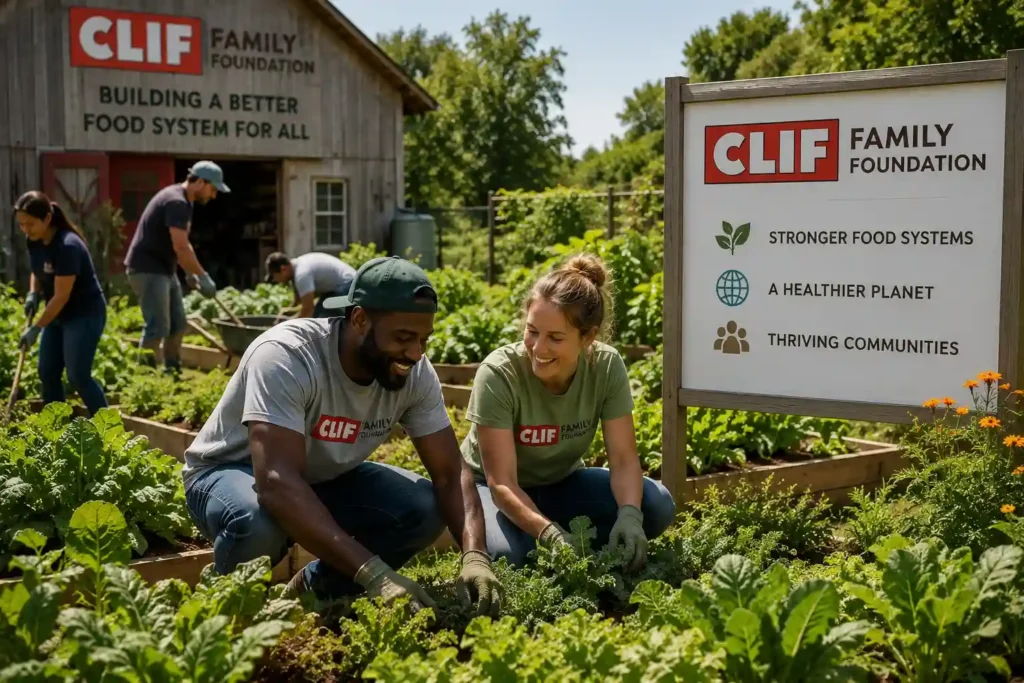
Blog Clif Family Foundation Grants: Eligibility, Funding Priorities, and How to Apply July 4, 2026 No Comments Michelle Bennett Understanding Clif Family Foundation Grants Clif Family Foundation Grants are awarded twice yearly to small and mid-sized nonprofit organizations working to strengthen food systems, protect the environment, and expand access to healthy communities. Eligible applicants must be 501(c)(3) organizations or fiscally sponsored groups with operating budgets under $8 million. Typical Clif grants range from $5,000 to $50,000 for one-year terms. This guide provides a complete overview of the Clif family foundation grants: What Is the Clif Family Foundation? Overview of Clif Family Foundation Grants Clif Family Foundation Funding Priorities Regenerative and Organic Farming Food Production Workers’ Health and Safety Climate Justice Healthy Food Access Inclusive Outdoor Access Indoors and Outdoors Safe from Pollution Grant Amounts and Funding Details Who Is Eligible for Clif Family Foundation Grants? Types of Projects Supported How to Apply for Clif Family Foundation Grants Best Way to secure $50,000 Nonprofit Grant Documents Required for Application Clif Family Foundation Application Process Timeline How the Foundation Evaluates Applications Tips for Winning Clif Family Foundation Funding Common Reasons Grant Applications Are Rejected Alternative Foundations Similar to Clif Family Foundation Frequently Asked Questions How Clif Family Foundation Helps Nonprofits Turn Ideas Into Impact Every year, thousands of nonprofit organizations compete for the limited pool of foundation grants available in the United States. For grassroots organizations working at the intersection of food justice, environmental sustainability, and community health, finding a funding partner that genuinely shares those values can be transformative. The Clif Family Foundation has built a reputation as one of the more accessible and mission-aligned grantmaking foundations for small and mid-sized nonprofits. Since 2006, the foundation has invested in hundreds of organizations working on the front lines of food system reform, climate resilience, and community well-being. What Is the Clif Family Foundation? The Clif Family Foundation is a private philanthropic foundation established in 2006 by the founders of Clif Bar & Company. The foundation was created with a clear purpose: to leave the world a better place for future generations. The foundation focuses its charitable giving on issues closely tied to food, health, environment, and community equity. Rather than spreading resources broadly, the foundation takes a strategic grantmaking approach, concentrating funding in areas where systemic change is possible and where grassroots organizations are already doing effective work. In 2024, the foundation supported over 361 nonprofit organizations, awarding approximately $23.4 million to advance food justice, community health, and environmental stewardship. With total foundation assets exceeding $570 million, the Clif Family Foundation has the capacity to make a meaningful impact on the organizations it funds. The foundation’s philanthropic approach prioritizes power-building, equity, and community-centered solutions, values reflected in every aspect of its grantmaking strategy. Overview of Clif Family Foundation Grants The foundation currently offers two grant programs: Open Call Grants Open to any eligible 501(c)(3) nonprofit or fiscally sponsored organization. These are the primary pathways for organizations applying independently. The foundation reviews Open Call applications twice per year. By Invitation Only (BIO) Grants These grants support organizations working on Food Systems Transformation or Climate Justice at a deeper level. As the name implies, BIO grants are not open to unsolicited applications, organizations must be invited to apply. For most nonprofits, the Open Call program is the entry point for Clif Foundation funding. Key Grant Facts at a Glance Feature Details Grant Range $5,000 – $50,000 Grant Duration 1 year Application Deadlines March 1 and August 1 annually Award Announcement Approximately 4 months after deadline Budget Threshold Under $8 million operating budget Organization Type 501(c)(3) or fiscally sponsored Geographic Focus United States and U.S. territories Clif Family Foundation Funding Priorities The foundation organizes its grant funding around six strategic priority areas. Organizations whose work intersects two or more of these areas are given preference in the review process. Regenerative and Organic Farming The foundation supports efforts to accelerate the adoption of regenerative farming practices, including organic, climate-resilient, agroecological, and equitable approaches to agriculture. Environmental sustainability in food production is central to this priority. Projects that connect ecological restoration with economic opportunity for farmers, particularly those from historically marginalized communities, align strongly with this area. Food Production Workers’ Health and Safety This priority amplifies efforts to secure healthy, safe, just, and empowering conditions for food production workers. Organizations advocating for farmworker rights, labor protections, and improved living and working conditions fall squarely within this funding area. Social equity and the dignity of food workers are central to what Clif Foundation funding seeks to advance here. Climate Justice The foundation expands support for community-centered climate solutions that build resilience and empower historically marginalized communities. This is not simply environmental advocacy in the abstract, it’s about ensuring that the communities most impacted by climate change lead the response. Priority pathways include movement-building, policy advocacy, community energy ownership, and narrative work that strengthens climate organizing at the local, state, and national levels. Healthy Food Access This priority advances food system changes that make healthy, sustainably produced food accessible, affordable, and culturally appropriate, particularly for underserved communities. Organizations working on food security efforts, community food programs, and food equity campaigns are strong candidates here. Inclusive Outdoor Access The foundation catalyzes solutions that expand access to safe outdoor spaces for healthy physical activity and improved mental health. Environmental education, outdoor recreation access, and community wellness initiatives connected to natural spaces all fit within this area. Indoors and Outdoors Safe from Pollution This priority supports preventative health approaches focused on identifying and eliminating toxins from air, water, soil, and human-made materials. Public health programs working on environmental health and pollution prevention align with this area. Grant Amounts and Funding Details Open Call grants from the Clif Family Foundation typically range from $5,000 to $50,000 for a one-year period. The foundation supports both general operating costs and specific project expenses, a flexibility that many grassroots organizations find valuable, since unrestricted operational support is harder to come by than project-specific funding. Approximately
Walmart Spark Good Grants: Complete Nonprofit Funding Guide for 2026

Blog Walmart Spark Good Grants: Complete Nonprofit Funding Guide for 2026 July 6, 2026 No Comments Jason Brooks Reality of Walmart Spark Good Grants Every year, thousands of nonprofits, schools, churches, and community organizations across the United States miss out on accessible corporate funding simply because they don’t know where to look or how to apply. Walmart Spark Good grants represent one of the most widely available, facility-level corporate giving programs in the country, and in 2026, the opportunity is very real. This complete guide covers everything your organization needs to know: What is the Walmart Spark Good grant program Who qualifies for Walmart Spark Good grant How to apply to the Walmart Spark Good grant What to expect Smart Tips for Crafting a Funding-Ready Application What Is Walmart Spark Good? Walmart Spark Good brings together all of Walmart’s community giving programs under one unified brand. Rather than managing multiple disconnected initiatives, Walmart and Sam’s Club consolidated their charitable programs into a single platform designed to empower local organizations and help them engage with both Walmart customers and associates around causes that matter. Through this Walmart giving program, eligible organizations gain access to a suite of community tools, including local cash grants, a Round Up at checkout donation program, a charitable item registry, and a Storefront Reservation tool that lets organizations fundraise outside Walmart facilities. The Spark good account on walmart.com serves as each organization’s centralized hub for managing all of these charitable activities with Walmart in one place. Spark good brings a cleaner, more strategic approach to corporate community investment, and for nonprofits, schools, and faith-based groups, it creates a genuine pathway to facility-level funding. What Are Walmart Spark Good Grants? Walmart Spark Good grants, formally called Spark Good Local Grants, are cash grants awarded directly through individual Walmart U.S. stores, Sam’s Club locations, and distribution centers to local organizations serving the same communities those facilities operate in. These are not national foundation grants that require multi-year track records and lengthy proposals. The Walmart Spark Good grant program is intentionally designed to be accessible. Local grants are designed to support local organizations that meet the unique needs of the communities where Walmart U.S. stores, Sam’s Clubs, and distribution centers operate, and to build pride among associates while deepening relationships with customers and members. Grant funds are disbursed electronically through JP Morgan and deposited directly into the organization’s bank account once approved. This makes the process fast and transparent compared to many other corporate grant programs. 2026 Application Cycles The 2026 grant cycle began February 1, 2026, with applications accepted through three cycles: Cycle Open Date Close Date Cycle 1 February 1 April 15 Cycle 2 May 1 July 15 Cycle 3 August 1 November 30 A maximum of 25 submitted or approved applications is allowed per organization at any given time in a calendar year. Who Is Eligible for Walmart Spark Good Grants? Understanding Walmart Spark Good eligibility is the foundation of a successful application. Every organization that wants to apply must first create a Spark good account and complete verification through Deed, Walmart’s third-party verification partner, before a single application can be submitted. This verification process is mandatory with no exceptions. Once verified, eligible entities fall into four categories: Organization Type Key Requirements 501(c)(3) Public Charity Current IRS tax-exempt status; listed on IRS Master File; classified under Section 509(a)(1), (2), or (3); Deed verified Government Entity U.S. federal agencies, state agencies, counties, cities, municipal agencies; Deed verified School All K-12 public or nonprofit private schools, charter schools, community/junior colleges, and universities; must have NCES number or 501(c)(3) status; Deed verified Faith-Based Organization Church or other faith-based organization with a project that benefits the community at large (e.g., food pantries, soup kitchens, clothing closets); Deed verified Important: Organizations classified as 501(c)(4)s, 501(c)(6)s, and 501(c)(19)s, including homeowner’s associations, civic leagues, and volunteer fire companies are not eligible at this time. Grants are also exclusively for U.S.-based organizations. DEED Verification Explained Deed is Walmart’s third-party verification partner that confirms an organization’s legitimacy before it can access any Spark good programs. The deed nonprofit verification process involves submitting organizational documentation to Deed, which cross-references it against official databases including the IRS Business Master File. Verification can take time, so starting this process well before an application cycle opens is essential, especially for organizations targeting Cycle 1 in February. Think of Deed verification as your organization’s credibility stamp. Without completing this verification process, no grant application can move forward. Types of Programs Walmart Commonly Funds The Spark good local grant program is broad by design. Walmart has made a deliberate commitment to supporting the communities where they operate, and that means funding a wide range of mission areas. Here are the program categories most commonly funded through Walmart community grants. Food Security Programs Organizations running food pantries, soup kitchens, meal distribution programs, and emergency food assistance are among the most consistently funded through the Spark good program. Food insecurity grants from this program have helped small pantries purchase supplies, expand capacity, and serve more families. Education Support Programs Education support grants are a natural fit for school grants from Walmart. K-12 schools, community colleges, and nonprofits running after-school tutoring, literacy programs, or STEM initiatives align closely with Walmart’s community investment priorities. Youth Initiatives Youth program grants through Spark Good support organizations providing mentorship, after-school programming, sports, arts, and leadership development for young people. These programs consistently reflect Walmart’s focus on building strong, capable local communities. Health & Wellness Programs Health and wellness grants support nonprofits delivering health screenings, mental health services, addiction recovery programs, and wellness education in underserved communities. Veteran Services Veteran Organization Grants support programs serving military veterans and their families, including housing assistance, employment readiness, mental health services, and peer support networks. Community Development Projects Community development grants fund broader neighborhood improvement efforts, from affordable housing advocacy to workforce development, financial literacy programs, and civic engagement initiatives. Walmart Spark Good Application Process Knowing how to apply for Walmart Spark