
NEH Collaborative Research Grants: Eligibility, Funding, Application Process, and Requirements

Blog NEH Collaborative Research Grants: Eligibility, Funding, Application Process, and Requirements September 4, 2026 No Comments Jason Brooks NEH Collaborative Research Grants: Program Overview The National Endowment for the Humanities (NEH) offers a program called “NEH Collaborative Grants,” which supports teams of two or more scholars conducting sustained humanities research that produces a shared scholarly output, such as a book, journal issue, digital publication, or scholarly website. This guide covers everything you need to know about NEH Collaborative Research Grants: What Is the NEH Collaborative Research Program? Research Grant Eligibility Who Is Eligible to Apply? What Kinds of Humanities Research Does NEH Fund? What Makes a Project “Collaborative”? Application Process How to Apply for NEH Collaborative Research Grants Application Requirements NEH Funding and Budget Common Mistakes in Collaborative Research Applications How a Grant Writing Company Can Help Frequently Asked Questions What Is the NEH Collaborative Research Program? The Collaborative Research program sits within NEH’s broader research funding portfolio, which also includes: Individual Fellowships Scholarly Editions Other Humanities Grants This particular program exists specifically for team-based projects. NEH describes it as supporting “groups of two or more scholars engaging in significant and sustained research in the humanities,” with an emphasis on interpretive scholarship rather than data collection alone. A project doesn’t qualify simply because it touches on a humanities subject. The research must be genuinely collaborative, meaning the scholars involved divide substantive intellectual responsibilities rather than one person doing the work with others listed nominally, and it must be aimed at producing a specific, lasting scholarly product. The key question is whether sustained humanistic inquiry is central to the project. Interdisciplinary teams can qualify, but the humanities research question should drive the project rather than serve as a secondary element. Visit the Official Grant Page NEH Collaborative Research Eligibility According to NEH’s program materials, this is a grant to organizations, not individuals. Colleges, universities, museums, libraries, research institutes, and other humanities organizations serve as the applicant of record, even though the actual research is carried out by a project director and a team of collaborating scholars. NEH guidance is explicit that projects undertaken by individuals working alone, without genuine collaboration, are not eligible for this program. Project Team Members Don’t Have to Be U.S. Citizens, but scholars based at U.S. institutions must contribute substantially to any project involving international collaboration. A project director or co-director may be named on only one Collaborative Research application per deadline, and individuals who currently hold a concurrent full-time award from NEH’s Division of Research Programs, such as an NEH Fellowship, are not eligible to serve as project director on a new award. Applicant Type Potential Eligibility What to Verify Academic institutions (colleges/universities) Typically the lead applicant organization Confirm your institution’s authorized organizational representative and SAM.gov registration are current Research teams / collaborating scholars Eligible as project personnel under an institutional application Confirm the project director isn’t listed on another application this cycle Nonprofit organizations, museums, libraries Potentially eligible as the applying organization Verify organizational eligibility in the current Notice of Funding Opportunity Individual scholars working alone Not eligible for this program Consider NEH’s individual fellowship programs instead Cultural and humanities organizations Potentially eligible Confirm project scope fits “significant and sustained” collaborative research Before You Invest Time: Check Eligibility and Competitiveness Separately Before committing significant time to an NEH Collaborative Research application, separate two questions that are easy to treat as one: Can the organization apply? Is the proposed project actually a strong fit? Organizational eligibility is only the first screen. A university, museum, library, or other potentially eligible organization may be able to submit an application, while the underlying project may still be a weak candidate because the collaboration is superficial, the research question is too broad, or the proposed output is not sufficiently defined. A useful pre-application check is to identify the project’s central humanities question, then map each collaborator to a substantive intellectual responsibility. If removing one collaborator would leave the research design essentially unchanged, the proposal may have difficulty demonstrating genuine collaboration. The same test applies to the proposed output: the team should be able to explain what will exist at the end of the award and how the research activities directly produce it. Before drafting, also compare the project against the current NOFO line by line, particularly the eligible research scope, funding category, performance period, cost requirements, and submission conditions. This can prevent a team from spending weeks developing a polished proposal that ultimately rests on a poor program fit. Who Is Eligible to Submit an Application for an NEH Funding Program? Eligible applicants are organizations sponsoring a team of scholars. The most common eligible organizations include: Colleges and Universities Museums Libraries Humanities-focused nonprofit organizations Other eligible institutions that support humanities research and scholarship The organization submits the application through Grants.gov on behalf of the project director and the collaborating scholars. Collaborators may be based at one institution or across several institutions, and NEH welcomes partnerships that involve researchers from the natural or social sciences, provided that the project remains focused on the humanities. The project itself remains grounded in humanistic content and methods. Remember that the applicant organization and research team are different. Before drafting, confirm who will submit the application, who will serve as project director, and whether each collaborator has a clearly defined role. What Areas of Humanities Research Are Eligible for NEH Support? NEH’s current guidance notes that applications must focus on the history and culture of the United States or Western civilization, a requirement introduced for the current funding cycle. Within that scope, relevant disciplines include: History Literature Philosophy Languages Religion Cultural Studies Art History Archaeology Linguistics American Studies Digital Humanities Public Humanities Projects should demonstrate humanistic inquiry grounded in primary sources, archival research, or textual and cultural analysis rather than simply gesturing at a topic. Not every humanities-adjacent idea will fit this particular program’s current scope, so applicants should read the Notice of Funding Opportunity closely before assuming a project qualifies. Collaborative Research: What
What Are Personal Grants? Complete Guide to Eligibility, Types, and How to Apply

Blog What Are Personal Grants? Complete Guide to Eligibility, Types, and How to Apply July 4, 2026 No Comments Sarah T What Are Personal Grants? (Quick Answer) Personal grants are funds awarded to individuals by government agencies, nonprofit organizations, or private foundations that do not need to be repaid. They are designed to support specific needs such as education, housing, emergency hardship, medical assistance, or veteran services. Eligibility depends on your income, circumstances, and the grant’s stated purpose. To apply, you identify a program, verify you qualify, and submit a complete application with supporting documentation. This guide covers everything you need to know about personal grants: What Are Personal Grants? Personal Grants Explained: How Do They Work? Personal Grants vs Loans, Scholarships, and Benefits Types of Personal Grants Available Government Personal Grants and Assistance Programs Who Qualifies for Personal Grants? How to Apply for Personal Grants Best way to Increase Your Chances of Grant Approval Personal Grant Scams to Avoid Best Personal Grants and Assistance Programs in 2026 Our Experience With Personal Grant Applications Common Reasons Grant Applications Get Rejected Frequently Asked Questions Understanding DOGE Humanities Grants Ruling Millions of Americans are navigating financial hardship with fewer options than ever. Rising housing costs, medical bills, student debt, and unexpected crises have pushed the demand for financial assistance to record levels. Yet most people either don’t know personal grants exist or believe they are too complicated to pursue. There’s also a widespread misconception that grants are only for businesses or researchers. In reality, personal grant programs, many funded by the federal government, state agencies, or private foundations, exist specifically for individuals and families facing real financial need. What Are Personal Grants? A personal grant is a form of non-repayable financial assistance awarded directly to an individual or household to meet a specific need. Unlike loans, personal grants do not need to be repaid, and unlike scholarships, they are not limited to academic achievement. What makes personal grants unique is that the funding is awarded for a defined purpose, housing, utilities, healthcare, education, and emergency relief, and comes with eligibility requirements that the applicant must meet. Examples of personal grant programs include: The federal Pell Grant is financial aid provided to help low-income college students. FEMA Disaster Assistance for individuals affected by declared disasters The USDA Section 504 Home Repair Grant for low-income rural homeowners LIHEAP (Low Income Home Energy Assistance Program) for utility costs VA Specially Adapted Housing Grants for disabled veterans Personal grants differ from traditional financial aid in one important way: they target a specific population, a specific need, and a specific use of funds. Misuse of grant funds can result in repayment requirements or disqualification from future programs. Personal Grants Explained: How Do They Work? Understanding how personal grants work helps set realistic expectations. Grants are funded through several sources: Federal government agencies (FEMA, HUD, USDA, VA, Department of Education) State and local government programs (housing authorities, health departments) Nonprofit organizations (United Way, local community foundations) Private foundations (corporate giving programs, family foundations) Once a grant program is established, the administering agency publishes eligibility requirements and opens an application window. Applicants are screened based on income, household size, need, and program-specific criteria. Qualifying applicants may receive funds directly or have payments made on their behalf for rent, repairs, tuition, or utility bills. Grants typically have specific purposes and restrictions. A housing grant cannot be used for medical expenses. Disaster relief emergency grants require documentation showing the impact of the disaster. Understanding these restrictions before applying saves time and improves your chances of approval. Personal Grants vs Loans, Scholarships, and Benefits Type Repayment Required Eligibility Purpose Restrictions Personal Grants No Need-based or group-specific Defined (housing, education, etc.) Must be used for the stated purpose Loans Yes + interest Credit and income-based Flexible Repayment terms apply Scholarships No Merit or group-specific Education only Academic use only Government Benefits No Income/status-based Ongoing support (food, healthcare) Program-specific rules Personal grants vs loans is an important distinction: grants are non-repayable financial assistance, while loans create debt. Benefits like SNAP or Medicaid provide ongoing support, whereas grants are typically one-time or short-term awards. If you’re still unsure, read our detailed comparison of grants, loans, and scholarships here: Difference Between Grants, Loans, and Scholarships. Types of Personal Grants Available Education Grants Education grants are among the most accessible personal grant programs in the United States. The Pell Grant, administered through FAFSA and Federal Student Aid (StudentAid.gov), provides up to $7,395 per year to qualifying low-income undergraduate students. College grants and tuition assistance programs are also offered at the state level, through universities, and via nonprofit organizations targeting first-generation students or specific demographics. Housing Grants Housing grants for individuals help low-income households secure stable, safe living conditions. The USDA Section 504 Home Repair Grant provides up to $10,000 to very low-income rural homeowners aged 62 or older for critical home repairs. HUD programs and local housing authorities offer additional support for renters and homeowners facing housing instability. Emergency and Hardship Grants Hardship grants and emergency financial assistance programs are designed for individuals facing sudden financial crises. FEMA’s Individuals and Households Program provides emergency grants to those affected by federally declared disasters. Community action agencies, local nonprofits, and charitable organizations also offer crisis assistance for utility shutoffs, eviction prevention, and food emergencies. Veteran Grants Veteran grants include some of the most generous personal grant funding available. The VA Specially Adapted Housing (SAH) Grant provides up to $117,014 to veterans with service-connected disabilities to build or modify a home for accessibility. Additional veterans benefits and veteran housing grants are available through state veteran affairs offices and nonprofit organizations like the Gary Sinise Foundation. Disability and Medical Assistance Grants Medical assistance grants and disability grants help individuals cover healthcare costs, assistive technology, and home modifications. Programs through HRSA, Medicaid waiver programs, and nonprofit foundations offer support for people managing chronic illness, disability-related expenses, or uncovered medical costs. Grants for Women, Artists, Researchers, and Special Groups Grants for women:
Disabled Veteran Business Start-Up Grants: Complete Funding Guide for 2026

Blog Disabled Veteran Business Start-Up Grants: Complete Funding Guide for 2026 July 4, 2026 No Comments Jason Brooks What Are Disabled Veteran Business Start-Up Grants? Disabled veteran business start-up grants are non-repayable funding awards available to veterans with service-connected disabilities who want to launch or grow a business. Eligible recipients typically hold an honorable discharge, own at least 51% of a for-profit business, and meet program-specific criteria. Unlike loans, grants don’t have to be repaid, making them one of the most powerful forms of business startup assistance available to veteran entrepreneurs. This guide provides a complete overview of the disabled veteran business start-up grants: What Are Disabled Veteran Business Start-Up Grants? Why Disabled Veterans Receive Special Business Funding Support Types of Business Funding Available for Disabled Veterans Best Disabled Veteran Business Start-Up Grants in 2026 Warrior Rising FedEx Founder’s Fund Military Entrepreneur Challenge (MEC) Hiring Our Heroes Small Business Grant Program Community Foundation of Greater Memphis SBIR/STTR Programs State Veteran Grant Programs SDVOSB Certification: A Gateway to Federal Contracting Veteran-Owned Business Grant Eligibility Requirements A Step-by-Step Guide to Securing Disabled Veteran Business Start-Up Grants Best Way to secure Grants for Veteran Alternative Funding Options Beyond Grants Resources That Help Veterans Start and Grow Businesses Grants vs. SBA Loans: Side-by-Side Comparison Common Grant Application Mistakes to Avoid Frequently Asked Questions Why Funding Is the Biggest Barrier for Disabled Veteran Entrepreneurs Starting a business is hard. Starting one while managing a service-connected disability, navigating VA benefits, and transitioning out of military service is significantly harder. Access to capital is consistently ranked as the top obstacle for veteran business owners, and disabled veterans face compounded challenges including medical costs, reduced earning capacity, and limited time to build credit. Disabled veteran business start-up grants exist specifically to bridge that gap. Alongside SBA programs, federal contracting opportunities, nonprofit grants, and state-level veteran grants, today’s veteran entrepreneurs have more funding opportunities than ever, but only if they know where to look and how to apply. What Are Disabled Veteran Business Start-Up Grants? Disabled veteran business start-up grants are funding programs designed to help veterans with service-connected disabilities launch, operate, or expand a business. Unlike traditional business loans, grants do not require repayment, making them one of the most valuable sources of startup capital available to veteran entrepreneurs. These grants are offered by a variety of sources, including federal agencies, state governments, nonprofit organizations, community foundations, and private corporations. Funding may be used for startup expenses such as business registration fees, equipment purchases, inventory, technology, marketing, licensing costs, employee training, and other operational needs. Most disabled veteran business grants are awarded competitively, meaning applicants must meet specific eligibility requirements and demonstrate a strong business concept, financial need, or potential economic impact. Some programs focus exclusively on service-disabled veteran-owned businesses (SDVOSBs), while others are available to veterans, military spouses, or broader small-business audiences that include veteran-owned companies. For many entrepreneurs, disabled veteran business start-up grants serve as a critical source of seed funding because they reduce the financial risk of starting a business. When combined with SBA programs, veteran-focused mentorship resources, and federal contracting opportunities, grants can provide the foundation needed to transform a business idea into a sustainable and profitable company. Why Disabled Veterans Receive Special Business Funding Support The federal government and private sector both recognize that veterans, particularly service-disabled veterans, bring extraordinary discipline, leadership, and problem-solving skills to entrepreneurship. Business grants for disabled veterans are designed to honor that service while accelerating economic empowerment. Congress has established policies that give veteran-owned businesses and service-disabled veteran-owned small businesses (SDVOSBs) preferred access to federal contracting, SBA programs, and financial assistance programs. The reasoning is straightforward: veteran entrepreneurship reduces unemployment, builds community wealth, and leverages skills honed through military service. Types of Business Funding Available for Disabled Veterans Business Start-Up Grants Seed funding specifically designed for early-stage disabled veteran business startup grants, covering licensing fees, initial inventory, equipment, and operating expenses. Small Business Grants for Veterans Competitive awards from foundations and corporations that support veteran-owned businesses at various growth stages. Federal Grants for Veterans Programs tied to federal agencies, including the Small Business Innovation Research (SBIR) and Small Business Technology Transfer (STTR) programs, which provide early-stage funding for veteran entrepreneurs in technology and research fields. State-Level Veteran Grants Many states offer dedicated veteran business grants through their departments of veterans affairs or economic development offices. Availability, funding amounts, and eligibility details vary widely by state. Nonprofit Grants for Veterans Organizations like Warrior Rising, Hiring Our Heroes, and community foundations provide grants, mentorship programs for veterans, and entrepreneurship training to help veteran entrepreneurs move from business idea to launch. Private Grant Programs Corporations including FedEx, StreetShares, and other national brands offer veteran-focused business grants and pitch competitions that provide startup capital, business education, and networking opportunities. Best Disabled Veteran Business Start-Up Grants in 2026 Warrior Rising Award: VariesEligibility: Veteran entrepreneurs, including disabled veterans and transitioning service membersWebsite: Warrior Rising GrantBest For: Early-stage veteran-owned startups seeking mentorship and funding Warrior Rising provides one-time cash awards, mentorship, and community support to help veterans transform ideas into thriving businesses. The program pairs veteran entrepreneurs with experienced mentors and offers both entrepreneurial training and direct funding. Ideal for early-stage disabled veteran entrepreneurs looking for both financial support and a strong community network. FedEx Founder’s Fund Award: Up to $50,000 Eligibility: Small businesses with 20 employees or fewer that meet program requirements Website: fedex.com Best For: Veteran-owned businesses needing growth capital and increased visibility The FedEx Founder’s Fund targets small businesses with fewer than 20 employees and provides grant funding plus business visibility. Applicants complete an online application and must demonstrate financial need and business viability. Best fit: veteran-owned companies needing working capital grants and marketing exposure. Military Entrepreneur Challenge (MEC) Award: Varies Eligibility: Active-duty service members, veterans, and military spouses Website: secondservicefoundation.org Best For: Entrepreneurs with scalable business ideas seeking funding and investor connections The MEC is a pitch competition open to veteran or military spouse entrepreneurs. Finalists receive startup funding,
William T. Grant Foundation Research Grants: Funding Opportunities, Eligibility, and Application Guide 2026
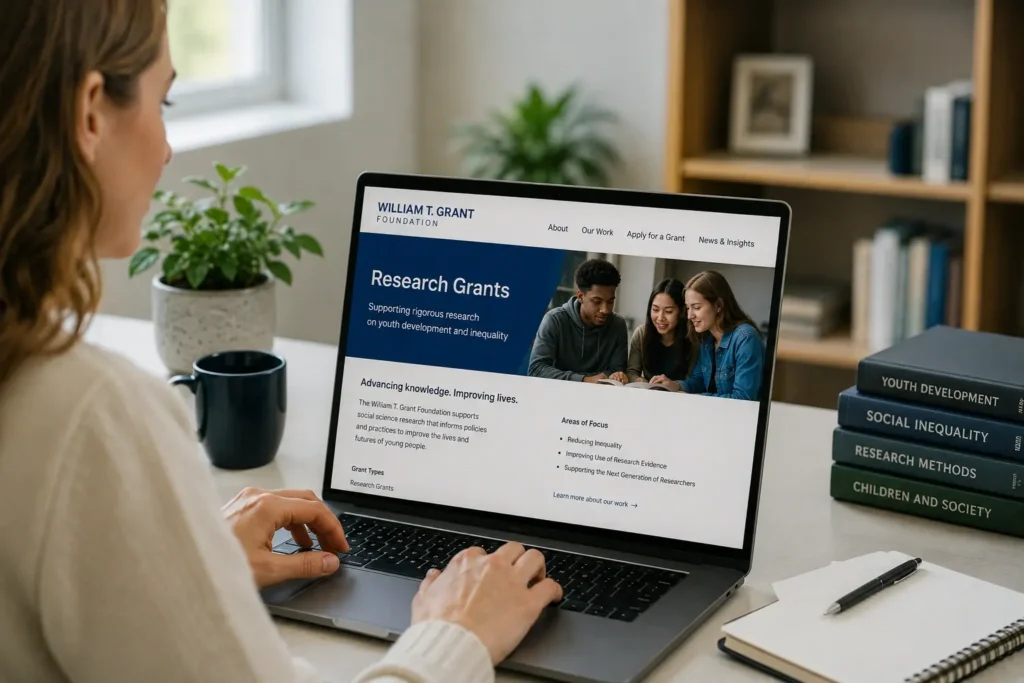
Blog William T. Grant Foundation Research Grants: Funding Opportunities, Eligibility, and Application Guide 2026 July 4, 2026 No Comments Emily Carter Understanding William T. Grant Foundation Research Grants William T. Grant Foundation Research Grants are competitive academic research funding awards administered by the William T. Grant Foundation, a private U.S. grant foundation dedicated to advancing social science research on youth development and inequality. These research grants support studies focused on young people ages 5–25 in the United States, and researchers apply through a structured letter of inquiry and full proposal process managed by the Foundation. This guide covers everything you need to know about William T. Grant Foundation Research Grants: What Are William T. Grant Foundation Research Grants? Why Research Grants Matter Funding Priorities of the William T. Grant Foundation Types of Research Grants Offered by William T. Grant Foundation Eligibility Criteria for William T. Research Grants How to Apply for William T. Grant Foundation Research Grants Research Focus Areas in 2026 Alternative Funding Options for Research Grants Common Mistakes in Grant Applications Best Way to secure $100,000 Research Grant Frequently Asked Questions The Role of the William T. Grant Foundation in Modern Research Social science research funding in the United States has never been more critical. As policymakers and practitioners search for evidence-based approaches to address systemic inequality and improve youth outcomes, the demand for rigorous, peer-reviewed research funding outpaces available resources. The William T. Grant Foundation occupies a distinctive position in this landscape. As one of the most respected foundation research funding programs in the country, it supports interdisciplinary social science research that directly informs decisions that affect young people. Rather than funding service delivery, the Foundation supports research to improve the lives of youth by generating knowledge that public agencies, nonprofit organizations, and policymakers can actually use. For researchers, principal investigators, and institutions pursuing academic research funding in youth development, inequality, or evidence use, understanding William T. Grant Foundation grants in depth is essential. What Are William T. Grant Foundation Research Grants? The William T. Grant Foundation is a private grant foundation established to support research that increases understanding of how to improve the lives of young people in the United States. Its foundation supports research within two focus areas: Reducing inequality in youth outcomes Improving the use of research evidence in decisions that affect young people William T. Grant Foundation Research Grants are not general-purpose awards. They fund research studies that aim to build a rigorous, cumulative body of knowledge aligned with the Foundation’s comprehensive research agenda. This focus makes them among the most strategically targeted academic research funding opportunities available to social scientists, child and adolescent development researchers, and policy-focused scholars. Why William T. Grant Foundation Research Grants Matter The gap in social science research funding is well-documented. Federal research grants often prioritize biomedical or STEM disciplines, leaving youth development research grants, education inequality research grants, and developmental psychology research funding chronically underfunded relative to need. The William T. Grant Foundation fills this gap by supporting: Youth well-being research grounded in real-world policy contexts Evidence-based social policy research that connects findings to practice Reducing inequality in youth outcomes through data-driven inquiry Social science impact research that shapes legislation, services, and institutional practice The Foundation’s investments help ensure that research evidence reaches the practitioners and policymakers who shape opportunities for young people, making these research grants among the most consequential in the social science field. Funding Priorities of the William T. Grant Foundation Reducing Inequality in Youth Outcomes The Foundation funds research grants on reducing inequality by examining how policies, programs, and practices to reduce inequality affect outcomes of young people ages 5–25 in the United States. This includes education inequality research grants, economic outcomes of young people, and child and adolescent development studies exploring structural disparities. Improving the Use of Research Evidence The Foundation is particularly interested in research on improving the use of research evidence in policy and practice settings. This strand supports research to inform equity-minded decision-making, strategies to improve the use of research in organizations, and applied social research projects examining how nonprofit partners can use research evidence in ways that benefit the populations they serve. Youth Well-Being Research Youth well-being research supported by the Foundation investigates social, emotional, and developmental factors shaping outcomes for young people. This includes longitudinal youth studies, program evaluation research, and community-based participatory research that centers youth voice and lived experience. Evidence-Based Social Policy Research Evidence-based social policy research funded by the Foundation examines how data-driven policy research can be translated into systemic change. The Foundation supports research to identify effective strategies to ensure that research evidence reaches and influences the decisions of public agencies and policymakers. Community-Based Participatory Research Community-based participatory research (CBPR) is a recognized methodology within William T. Grant Foundation grants. CBPR projects that incorporate youth and community perspectives into study design are well-aligned with the Foundation’s commitment to research that increases our understanding of real-world conditions affecting young people. Types of Research Grants Offered Major Research Grants Major research grants support large-scale, rigorous studies aligned with the Foundation’s two focus areas. These are flagship academic research funding awards for institutions and principal investigators with a demonstrated record of conducting high-quality research and an interest in generating findings with policy or practice relevance. Research-Practice Partnerships The Foundation supports sustained research-practice partnerships with public agencies or nonprofit organizations in order to reduce inequality or improve research use. These grants enable scholars and practitioners to collaborate on shared questions with real-world stakes. Institutional Challenge Grant The institutional challenge grant is a specialized award designed to help academic institutions build internal capacity to support research-practice partnerships. It is available to a limited number of institutions and reflects the Foundation’s long-term investment in organizational infrastructure. Rapid Response Research Grants The Foundation developed the rapid response research grants program in 2017 to foster agile uses of research to respond to urgent policy moments. The rapid response research grants program funds research grants to support collaborations between researchers and
Warrior Rising Grant: Complete Funding Guide for Veterans (2026)

Blog Warrior Rising Grant: Complete Funding Guide for Veterans (2026) July 6, 2026 No Comments Emily Carter Understanding Warrior Rising Grant Starting a business after military service is one of the most rewarding paths a veteran can take, and one of the most challenging. Capital gaps, unfamiliar civilian markets, and a lack of business mentorship leave many veteran entrepreneurs stalled before they launch. The Warrior Rising grant program exists to close exactly that gap, offering veteran entrepreneurs a combination of cash grants, in-kind business services, and a veteran founder community that few other programs can match. This complete 2026 guide explains everything you need to know: What Is the Warrior Rising Grant Program? Difference between Warrior Academy, Warrior University, and Business Shower Who Is Eligible for the Warrior Rising Grant? Warrior Rising Grant Requirements How to Apply for the Warrior Rising Grant Online? Best way to get Warrior Rising Grant Warrior Rising Funding Amounts Best Veteran Business Grants 2026 What Is Warrior Rising? Warrior Rising is a 501(c)(3) veteran nonprofit headquartered in Lehi, Utah, founded in 2015 by Jason Van Camp, a former U.S. Army Green Beret, author, and entrepreneur. Its mission is straightforward: to empower U.S. military veterans and their families to achieve their dreams through entrepreneurship. Unlike SBA veteran business programs or VA benefit pathways, Warrior Rising is a privately funded charity. It draws revenue from corporate sponsors, including companies like Qualtrics, Adobe, and U.S. Bank, as well as individual donors, fundraising events, and family foundations. That independence allows it to act more quickly and provide more adaptable support to experienced entrepreneurs than what is usually possible through government programs. Since its establishment, Warrior Rising has provided more than $6 million in grants and in-kind support to over 300 veteran-owned businesses, while also assisting more than 1,000 veteran entrepreneurs through its accelerator programs and training network. Its GuideStar Platinum Seal of Transparency, confirms the organization publicly discloses audited financials, board composition, and program metrics. For veterans weighing the legitimacy of this program: Warrior Rising is real, active, and financially sound. What Is the Warrior Rising Grant Program? The Warrior Rising grant program provides non-dilutive funding to veteran-owned businesses through a competitive pitch process. “Non-dilutive” means you give up zero equity and repay zero dollars. This is a grant, not a loan, there is: no interest, no repayment schedule no lender to satisfy It is a zero equity, zero interest award designed to give veteran businesses a genuine capital runway. The typical warrior rising grant amount is $20,000 in cash, paired with approximately $20,000 in in-kind professional services, such as: branding, legal setup, accounting, website development, and marketing support, delivered through Warrior Rising’s partner network. Combined, the package is marketed as a $40,000 value. This model distinguishes Warrior Rising from programs that offer only training or only networking. It is a veteran business accelerator with real dollars attached, and that combination is rare in the veteran funding landscape. Warrior Academy, Warrior University, and Business Shower Explained The Warrior Rising veteran business program runs on three interconnected pillars. Understanding how they fit together is essential before you apply. Warrior Academy Warrior Academy is the flagship program: a free, cohort-based business accelerator that runs 10-12 weeks online. It covers business model validation, financial fundamentals, marketing, legal basics, and pitch preparation. Every participant is assigned a dedicated mentor, typically a successful entrepreneur, many of them veterans, and works through live weekly sessions plus assignments. This is where capital readiness and business training for veterans get serious. Warrior Academy is not a weekend seminar. Expect to invest 5–8 hours per week. Graduates who complete the program are the primary pipeline for the Business Shower pitch competition. The acceptance rate for the Academy is estimated at 20–40%, making it accessible but not automatic. Note: Completing Warrior Academy does not guarantee entry into the Business Shower or funding. The grant requires a separate, highly competitive selection process. Warrior University Warrior University is the digital learning hub available to all program participants. It houses on-demand video modules, masterclasses from business leaders, and supplementary resources on veteran-specific funding, including $20,000 Veteran Business Grants, marketing, and growth strategy. Think of it as the always-on resource library that supports your mentorship for veterans journey between live sessions. Warrior University also anchors the veteran founder community, a network of alumni and current participants who share opportunities, feedback, and referrals. For many participants, this peer network delivers as much value as any formal training module. Business Shower The selection criteria include business viability and traction, a clear plan for deploying the funds, mission alignment with veteran hiring and impact, and pitch quality. A typical Business Shower winner usually already has some revenue, a clearly defined plan for how the funds will be used, and a strong personal narrative rooted in their military experience. Who Is Eligible for the Warrior Rising Grant? Warrior Rising grant eligibility is intentionally broad to serve as many veterans as possible. Eligibility Category Details U.S. Military Veterans Any era, any branch, honorable or general discharge (dishonorable discharge disqualifies) Active Duty Entrepreneur Eligible in some cases; check current cohort guidelines Guard and Reserve Entrepreneur Eligible Military Spouse Entrepreneur Spouses of veterans are considered, particularly in some cohorts Service-Disabled Veteran (SDVet) Eligible; SDVet status can strengthen mission alignment in judging Immediate Family Member Some programs extend eligibility to immediate family members of qualifying veterans Pre-revenue startups can apply to Warrior Academy, but business shower finalists almost universally have demonstrated market demand and some level of sales. Judges want to see that the grant will accelerate growth, not create it from scratch. Want to make sure your application actually gets funded? Unlock the full breakdown of what judges look for, in our guide Grant Requirements and give yourself a serious competitive edge. Warrior Rising Grant Requirements Beyond eligibility, the warrior rising grant requirements for the Business Shower focus on business readiness. Application Readiness Checklist: DD214 or military service documentation Registered for-profit business (LLC, S-Corp, C-Corp, or sole proprietor with
Warrior University $20,000 Veteran Business Grants: Complete 2026 Application Guide

Blog Warrior University $20,000 Veteran Business Grants: Complete 2026 Application Guide July 6, 2026 No Comments Jason Brooks Understanding Warrior University $20,000 Veteran Business Grants Every year, thousands of veteran entrepreneurs launch small businesses with the discipline and leadership they earned in uniform, only to hit the same wall: access to capital. Traditional lenders: Check Credit Scores Demand Collateral Move Slowly Every year, thousands of veteran entrepreneurs launch small businesses with the discipline and leadership they earned in uniform, only to hit the same wall: access to capital. Traditional lenders: What Is the Warrior University’s Veteran Business Grant? Who Qualifies for the Grant? Documents Required for Veteran Grant Applications How to Apply Online Other Veteran Business Funding Programs Is the Warrior University Grant Legit? Best Way to Win the Grant What Is the Warrior University $20,000 Veteran Business Grants Program? The Warrior University $20,000 veteran business grants program is not a simple application form you submit and wait on. It’s a structured, three-stage educational and competitive pipeline operated by Warrior Rising, a 501(c)(3) nonprofit founded in 2015 by veterans Joe Hilton, Bryan Miller, and Jason G. van Camp. Here’s how the warrior university grant program works from start to finish: Stage Format Cost Outcome Warrior Academy Self-paced online training Free Business fundamentals, eligibility for Warrior University Warrior University Live virtual (Zoom, 2 evenings) Free Certificate of completion, Business Shower eligibility Business Shower Invite-only in-person pitch competition Free (flights + hotel covered) Non-dilutive grants from $2,000 to $150,000 Funding is non-dilutive: no equity surrendered, no repayment required, no catch. Warrior Rising’s official language says it plainly: “No equity. No catch. Just the opportunity you’ve earned.” The program has been recognized by the Small Business Administration (SBA) as an official Resource Partner since 2022, and the VA’s own news site covered it in May 2026. Its Charity Navigator score sits at 98% / Four-Star, among the highest ratings a U.S. nonprofit can receive. Who Qualifies for the Grant? Veteran grant eligibility requirements for this program are notably broad. Applicant Category Eligible? Veterans (honorable discharge) Yes Active Duty Service Members Yes National Guard / Reserve Members Yes Military Spouses Yes Immediate Family Members of Veterans Yes Service-Disabled Veterans (SDVOSB) Yes Non-veteran civilians No There is no minimum revenue requirement no minimum years in operation no industry restriction The program accepts businesses at every stage, from launching a business around a rough idea to scaling a company already doing revenue. Veterans of all eras are welcome, and the program has dedicated tracks for women veterans and service-disabled veteran-owned small businesses (SDVOSB), including specialized “Saluting Her Service” Business Shower events. Required Documents for Veteran Grant Applications Getting your paperwork in order before you apply is critical. Incomplete applications are one of the most common grant application mistakes veterans make. Application Readiness Checklist DD214 (proof of military service / honorable discharge) Government-issued photo ID Business registration documents (LLC, EIN, or equivalent) Business plan or written business summary (1–2 pages minimum) Pitch deck (10–12 slides covering problem, solution, traction, market, ask) Financial documents for grants, such as profit and loss statements, projected revenues, or bank statements (if the business is already operating) Resume or founder bio Optional but recommended: 2–3 minute video pitch For active duty service members or National Guard members, a current military ID or deployment orders substitutes for the DD214. Military spouses should include documentation of their sponsor’s military affiliation. For a deeper breakdown of eligibility rules, paperwork standards, and what funding organizations typically look for, read our complete guide on Grant Requirements before submitting your application. How to Apply for Warrior University Veteran Grants Online The grant application process unfolds in sequential stages. You cannot skip directly to the funding competition, you must earn eligibility through the training pipeline first. Step 1: Verify Eligibility Confirm you meet the veteran or military family member requirement. Visit warriorrising.org and review the program overview before investing time in the process. Step 2: Enroll in Warrior Academy No formal application is required for the Academy. Register through the website, gain immediate access to self-paced business education modules, and complete the foundational startup training. Step 3: Register for Warrior University Slots fill quickly. Warrior University runs on a cohort schedule (e.g., June 9-10, 2026 with a June 6 registration deadline). Register early via the Warrior University page. Attendance across two live evening Zoom sessions earns your certificate of completion. Step 4: Gather Documentation Using the checklist above, assemble your business plan for grant applications, financial records, DD214, and pitch deck. Strong traction metrics, even modest ones like “10 paying customers” or “$2,000 in pre-sales”, dramatically improve your odds. Step 5: Submit the Business Shower Application After completing Warrior University, you’ll receive access to the Business Shower application. Submit early. Include a compelling narrative connecting your military service to your business mission. A video pitch is strongly recommended. Many applicants also use Grant Submission Support to review their application package, organize supporting documents, and ensure all required materials are properly submitted before the deadline. Step 6: Wait for Review and Selection The grant selection process is competitive. Warrior Rising’s team evaluates all applications holistically. If selected, you’ll be notified and travel arrangements (flights, hotel) will be covered by Warrior Rising at no cost to you. How Grant Writing Services Can Help Navigating veteran business grants from researching eligibility to preparing competitive applications, it takes time that most entrepreneurs simply don’t have. This is where professional grant writing services add real value. A qualified grant writing firm handles the research-heavy groundwork: identifying the right opportunities, tracking application deadlines, and matching your business profile to programs like: Warrior Rising SBA funding Federal Grant Databases Beyond discovery, grant research services ensure you’re not wasting time applying to programs you don’t qualify for. When it comes to the actual submission, grant submission services help structure your narrative, organize required financial documents, and ensure every section of the application reflects your business strengths accurately. For competitive pitch-based programs like Warrior University, this can