Disabled Veteran Business Start-Up Grants: Complete Funding Guide for 2026
- August 20, 2026
- No Comments
- Jason Brooks
What Are Disabled Veteran Business Start-Up Grants?
Disabled veteran business start-up grants are non-repayable funding awards available to veterans with service-connected disabilities who want to launch or grow a business. Eligible recipients typically hold an honorable discharge, own at least 51% of a for-profit business, and meet program-specific criteria. Unlike loans, grants don’t have to be repaid, making them one of the most powerful forms of business startup assistance available to veteran entrepreneurs.
This guide provides a complete overview of the disabled veteran business start-up grants:
- SDVOSB Certification: A Gateway to Federal Contracting
- Veteran-Owned Business Grant Eligibility Requirements
- A Step-by-Step Guide to Securing Disabled Veteran Business Start-Up Grants
- Best Way to secure Grants for Veteran
- Alternative Funding Options Beyond Grants
- Resources That Help Veterans Start and Grow Businesses
- Grants vs. SBA Loans: Side-by-Side Comparison
- Common Grant Application Mistakes to Avoid
- Frequently Asked Questions
Why Funding Is the Biggest Barrier for Disabled Veteran Entrepreneurs
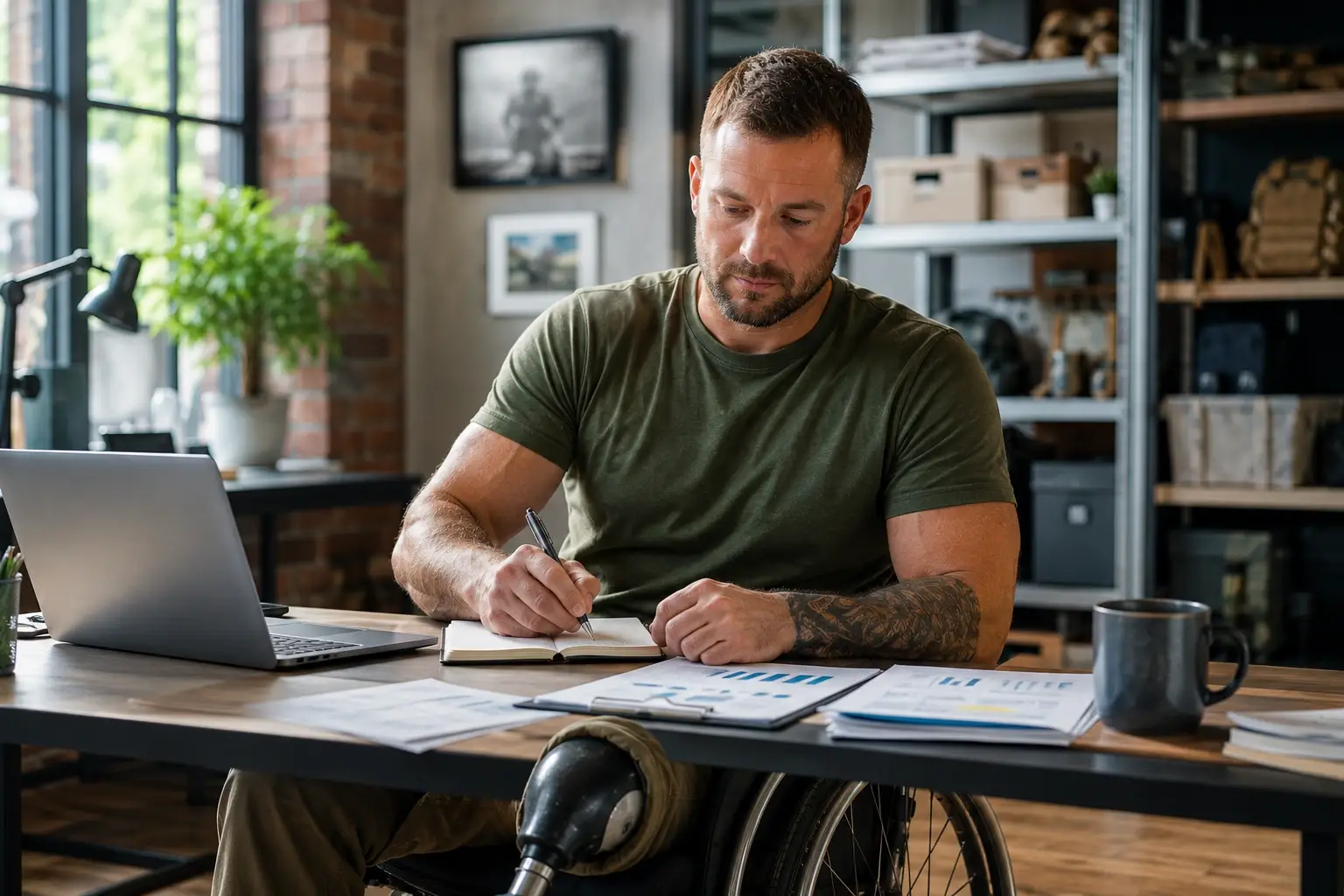
Starting a business is hard. Starting one while managing a service-connected disability, navigating VA benefits, and transitioning out of military service is significantly harder. Access to capital is consistently ranked as the top obstacle for veteran business owners, and disabled veterans face compounded challenges including medical costs, reduced earning capacity, and limited time to build credit.
Disabled veteran business start-up grants exist specifically to bridge that gap. Alongside SBA programs, federal contracting opportunities, nonprofit grants, and state-level veteran grants, today’s veteran entrepreneurs have more funding opportunities than ever, but only if they know where to look and how to apply.
What Are Disabled Veteran Business Start-Up Grants?
Disabled veteran business start-up grants are funding programs designed to help veterans with service-connected disabilities launch, operate, or expand a business. Unlike traditional business loans, grants do not require repayment, making them one of the most valuable sources of startup capital available to veteran entrepreneurs.
These grants are offered by a variety of sources, including federal agencies, state governments, nonprofit organizations, community foundations, and private corporations. Funding may be used for startup expenses such as business registration fees, equipment purchases, inventory, technology, marketing, licensing costs, employee training, and other operational needs.
Most disabled veteran business grants are awarded competitively, meaning applicants must meet specific eligibility requirements and demonstrate a strong business concept, financial need, or potential economic impact. Some programs focus exclusively on service-disabled veteran-owned businesses (SDVOSBs), while others are available to veterans, military spouses, or broader small-business audiences that include veteran-owned companies.
For many entrepreneurs, disabled veteran business start-up grants serve as a critical source of seed funding because they reduce the financial risk of starting a business. When combined with SBA programs, veteran-focused mentorship resources, and federal contracting opportunities, grants can provide the foundation needed to transform a business idea into a sustainable and profitable company.
Why Disabled Veterans Receive Special Business Funding Support
The federal government and private sector both recognize that veterans, particularly service-disabled veterans, bring extraordinary discipline, leadership, and problem-solving skills to entrepreneurship. Business grants for disabled veterans are designed to honor that service while accelerating economic empowerment.
Congress has established policies that give veteran-owned businesses and service-disabled veteran-owned small businesses (SDVOSBs) preferred access to federal contracting, SBA programs, and financial assistance programs. The reasoning is straightforward: veteran entrepreneurship reduces unemployment, builds community wealth, and leverages skills honed through military service.
Types of Business Funding Available for Disabled Veterans
Business Start-Up Grants
Seed funding specifically designed for early-stage disabled veteran business startup grants, covering licensing fees, initial inventory, equipment, and operating expenses.
Small Business Grants for Veterans
Competitive awards from foundations and corporations that support veteran-owned businesses at various growth stages.
Federal Grants for Veterans
Programs tied to federal agencies, including the Small Business Innovation Research (SBIR) and Small Business Technology Transfer (STTR) programs, which provide early-stage funding for veteran entrepreneurs in technology and research fields.
State-Level Veteran Grants
Many states offer dedicated veteran business grants through their departments of veterans affairs or economic development offices. Availability, funding amounts, and eligibility details vary widely by state.
Nonprofit Grants for Veterans
Organizations like Warrior Rising, Hiring Our Heroes, and community foundations provide grants, mentorship programs for veterans, and entrepreneurship training to help veteran entrepreneurs move from business idea to launch.
Private Grant Programs
Corporations including FedEx, StreetShares, and other national brands offer veteran-focused business grants and pitch competitions that provide startup capital, business education, and networking opportunities.
Best Disabled Veteran Business Start-Up Grants in 2026
Warrior Rising
Award: Varies
Eligibility: Veteran entrepreneurs, including disabled veterans and transitioning service members
Website: Warrior Rising Grant
Best For: Early-stage veteran-owned startups seeking mentorship and funding
Warrior Rising provides one-time cash awards, mentorship, and community support to help veterans transform ideas into thriving businesses. The program pairs veteran entrepreneurs with experienced mentors and offers both entrepreneurial training and direct funding. Ideal for early-stage disabled veteran entrepreneurs looking for both financial support and a strong community network.
FedEx Founder's Fund
Award: Up to $50,000
Eligibility: Small businesses with 20 employees or fewer that meet program requirements
Website: fedex.com
Best For: Veteran-owned businesses needing growth capital and increased visibility
The FedEx Founder’s Fund targets small businesses with fewer than 20 employees and provides grant funding plus business visibility. Applicants complete an online application and must demonstrate financial need and business viability. Best fit: veteran-owned companies needing working capital grants and marketing exposure.
Military Entrepreneur Challenge (MEC)
Award: Varies
Eligibility: Active-duty service members, veterans, and military spouses
Website: secondservicefoundation.org
Best For: Entrepreneurs with scalable business ideas seeking funding and investor connections
The MEC is a pitch competition open to veteran or military spouse entrepreneurs. Finalists receive startup funding, business development resources, and access to investor networks. Best fit: veteran startups with a scalable business model.
Hiring Our Heroes Small Business Grant Program
Award: Varies
Eligibility: Veteran and military spouse entrepreneurs operating eligible small businesses
Website: hiringourheroes.org
Best For: Veteran-owned businesses looking for financial assistance and business development support
The Heroes Small Business Grant Program, operated by the U.S. Chamber of Commerce Foundation, targets veteran and military spouse entrepreneurs with grant funding and entrepreneurship support programs. Applications require a business plan and eligibility verification.
Community Foundation of Greater Memphis
Award: Varies
Eligibility: Veterans and veteran-owned businesses located in eligible economically vulnerable communities
Website: cfgm.org
Best For: Veteran entrepreneurs seeking local funding and community-based support
The Community Foundation of Greater Memphis and similar local community foundations across the country offer grants for veteran-owned businesses located in an economically vulnerable community. These programs prioritize veterans demonstrating financial need and local economic impact.
SBIR/STTR Programs
Award: Up to $2 million or more, depending on project phase and agency
Eligibility: U.S.-based small businesses engaged in research, technology, or innovation projects
Website: sbir.gov
Best For: Veteran entrepreneurs developing innovative technologies, products, or research-driven businesses
For veteran entrepreneurs in technology, research, and innovation, the Small Business Innovation Research (SBIR) and Small Business Technology Transfer (STTR) programs provide federal grant funding at multiple stages. Awards can reach into the millions for qualifying small businesses. Applications require a strong technical proposal and a registered for-profit business.
State Veteran Grant Programs
Award: Typically $1,000–$25,000+, depending on the state and program
Eligibility: Varies by state, but generally available to veteran-owned businesses meeting local requirements
Website: Varies by state
Best For: Veteran entrepreneurs seeking local or state-level business funding opportunities
Many states offer grants, loans, and incentive programs specifically for veteran-owned businesses. These programs can help cover startup costs, expansion expenses, workforce development, equipment purchases, and other business needs while supporting local economic growth.
Key SBA programs for veterans:
- Boots to Business: Free entrepreneurship training for transitioning service members and veterans, covering business fundamentals, startup costs, and funding strategies
- Veteran Business Outreach Center (VBOC): Provides individualized business planning assistance, financial planning support, and referrals across the country
- Office of Veterans Business Development: The SBA's dedicated office overseeing all veteran entrepreneurship programs
- SCORE Mentorship for Veterans: Free mentorship from experienced business professionals through SBA resource partners
- SBA Loans for Veterans: Including the SBA Express Loan and Veterans Advantage program, which offer loans with favorable terms for veteran-owned businesses
- Microloans for Veterans: SBA microloans up to $50,000 through nonprofit intermediaries, ideal for early-stage business launch
These programs complement grant funding by helping veteran business owners build strong business plans, develop financial projections, and prepare competitive grant applications.
SDVOSB Certification: A Gateway to Federal Contracting

What is SDVOSB?
The Service-Disabled Veteran-Owned Small Business (SDVOSB) certification is a federal designation that gives qualifying businesses preferred access to government contracts. The federal government is required to set aside certain procurement opportunities exclusively for SDVOSBs.
Eligibility Requirements:
- Veteran must have a service-connected disability verified by the Department of Veterans Affairs (VA)
- Veteran must own and control at least 51% of the business
- The business must meet the SBA's definition of a small business based on its size standards.
- Must be a for-profit business
How to Apply:
- Obtain a VA disability rating confirming service-connected disability
- Register your business in SAM.gov
- Apply for SDVOSB certification through the SBA's Veteran Small Business Certification (VetCert) program
- Maintain compliance with annual recertification requirements
Benefits:
SDVOSB certification opens doors to sole-source federal contracting opportunities, set-aside procurement opportunities, and supplier diversity programs that can generate significant revenue, often far exceeding what any single grant provides.
Veteran-Owned Business Grant Eligibility Requirements
Eligibility Checklist
- Honorable discharge from U.S. military service (or current active-duty status for certain programs)
- Service-connected disability rating from the VA (for SDVOSB and disability-specific programs)
- Own at least 51% of the business
- Operating a for-profit business (most grant programs exclude nonprofits)
- Business meets annual revenue and employee limits specified by each program
- Business registered in relevant state and federal systems (SAM.gov for federal programs)
- Strong business plan with measurable goals
- Demonstrated funding eligibility and financial need (for need-based programs)
Military spouses may also qualify for many veteran or military spouse entrepreneur programs, including MEC and Hiring Our Heroes grants.
A Complete Guide to Applying for Disabled Veteran Business Start-Up Grants
Step 1: Identify Funding Opportunities
Use grant directories, SBA’s resource partner network, VBOC advisors, and veteran business development centers to compile a targeted list of grant opportunities that match your business type, stage, and location. Grant research services can help uncover relevant opportunities faster and ensure your efforts focus on grants that align with your eligibility and funding goals.
Step 2: Verify Eligibility
Review grant eligibility criteria carefully before investing time in an application. Confirm disability status, business registration, ownership structure, and any annual revenue limitations.
Step 3: Develop a Business Plan
Most grant programs require a business plan. Work with a VBOC advisor or SCORE mentor to develop a plan that includes financial projections, market analysis, and a clear description of your startup costs and operating expenses. Grant proposal writing can help ensure your business plan and supporting narratives clearly communicate your funding needs, project goals, and overall business viability.
Step 4: Gather Supporting Documents
Common requirements include DD-214, VA disability rating letter, business registration documents, EIN, tax returns, and financial statements.
Step 5: Complete Grant Applications
Answer every question thoroughly. Provide a business plan, demonstrate financial need where required, and align your narrative with the grant’s stated goals.
Step 6: Submit Before Deadlines
Application deadlines are non-negotiable. Missing a deadline disqualifies even the strongest application. Grant submission support can help you stay organized, track key deadlines, and ensure all required documents are completed and submitted on time.
Step 7: Follow Up
After submission, confirm receipt, monitor your application status, and respond promptly to any reviewer requests for additional information.
How Grant Writing Services Improve Funding Success
Identifying the right grant opportunities is only the first step. Competitive disabled veteran business start-up grants receive hundreds of applications, and reviewers fund the proposals that are clearest, most compelling, and best aligned with program goals.
Professional grant writing services can support veteran entrepreneurs by:
- Researching funding opportunities matched to your specific business and eligibility profile
- Conducting thorough eligibility analysis before any application is submitted
- Developing strong narratives that connect your military experience to your business mission
- Preparing complete, compliant grant application packages
- Creating financial projections and business plans that meet reviewer expectations
- Managing application deadlines and tracking submission requirements
- Supporting post-award reporting and grant compliance
For veteran entrepreneurs with limited time and high competition, working with a professional grant writing partner significantly improves both the quality of applications and the likelihood of securing funding.
Alternative Funding Options Beyond Grants
Funding Type |
Repayment |
Approval Speed |
Funding Size |
Risk Level |
|---|---|---|---|---|
Disabled Veteran Business Grants
|
None
|
Slow (competitive)
|
$500–$50,000+
|
Low
|
SBA Loans for Veterans
|
Yes + interest
|
Moderate
|
$500–$5M
|
Moderate
|
SBA Microloans
|
Yes + interest
|
Moderate
|
Up to $50,000
|
Low–Moderate
|
Lines of Credit
|
Yes + interest
|
Fast
|
Varies
|
Moderate
|
Crowdfunding for Veteran Startups
|
None
|
Fast
|
Varies
|
Low
|
Angel Investors for Veterans
|
Equity stake
|
Moderate
|
$25K–$500K+
|
High
|
Pitch Competitions
|
None
|
Varies
|
$5K–$100K+
|
Low
|
Capital Investment Programs
|
Equity/Debt
|
Varies
|
Varies
|
Moderate–High
|
To better understand non-repayable funding pathways, see our next guide on Types of Grants Available in the US, which breaks down the major grant categories and eligibility criteria in detail.
Resources That Help Veterans Start and Grow Businesses
- Boots to Business: Free SBA entrepreneurship training for transitioning service members
- VBOC: Free one-on-one business planning assistance
- SCORE: Free mentorship from retired executives and business professionals
- Warrior Rising: Veteran community, mentorship, and funding
- StreetShares Foundation: Veteran business grants and small business capital resources
- Business incubators for veterans: Provide workspace, training, and networking
- Startup accelerator programs: Intensive programs that help veteran startups scale faster
- Women Veterans Entrepreneurship Programs: Targeted support for women veteran business owners
- Women Veterans Entrepreneurship Programs: Targeted support for women veteran business owners
- Minority veteran business support programs: Address intersecting barriers for minority veteran entrepreneurs
Grants vs. SBA Loans: Side-by-Side Comparison
Factor |
Veteran Business Grants |
SBA Loans for Veterans |
|---|---|---|
Repayment
|
Not required
|
Required with interest
|
Funding Size
|
Typically smaller
|
Up to $5 million
|
Competition
|
High (competitive awards)
|
Qualification-based
|
Speed
|
Slow (months)
|
Moderate (weeks)
|
Business Stage
|
Often startup-focused
|
Startup through growth
|
Best Use
|
Seed funding, startup costs
|
Equipment, working capital, growth
|
Many veteran business owners combine both: grants fund early-stage startup costs while SBA loans with favorable terms support business expansion and revenue growth. To go one step further in understanding how different funding mechanisms compare, see our guide on Difference Between Grants, Loans, and Scholarships.
Common Grant Application Mistakes to Avoid
- Missing deadlines
- Weak or missing business plan
- Poor financial planning
- Incomplete applications
- Failure to demonstrate need
- Lack of measurable goals
- Mismatched eligibility
For a deeper look at common pitfalls in proposal writing and how to avoid them, see Top Grant Writing Mistakes and How to Avoid Them.
Conclusion
Disabled veteran business start-up grants represent one of the most powerful forms of startup funding available to veteran entrepreneurs in 2026. Between federal programs, state-level veteran grants, nonprofit grants, and private grant programs, combined with SBA loans, SDVOSB contracting opportunities, and robust entrepreneurial support through VBOC, Boots to Business, and SCORE, the resources to help veterans start or grow a business have never been more accessible.
The challenge isn’t the absence of opportunity. It’s finding the right programs, meeting the eligibility requirements, and submitting competitive applications before deadlines close. Preparation matters. A strong business plan, accurate financial planning, and a clear narrative about your veteran experience and business vision can be the difference between funding and rejection.
Whether you’re at the earliest stage of a business idea or ready to scale a growing veteran-owned company, the funding opportunities exist. The next step is yours to take.
Need Help Finding and Applying for Disabled Veteran Business Start-Up Grants?
Our grant writing team helps veteran entrepreneurs research funding opportunities, evaluate eligibility, prepare competitive grant applications, develop business plans, and create winning proposals. Schedule a free consultation today to explore your funding options.
Frequently Asked Questions
Which grants can help disabled veterans start a business?
Grants for disabled veterans starting a business include Warrior Rising, FedEx Founder’s Fund, the Military Entrepreneur Challenge, Hiring Our Heroes Small Business Grant Program, SBIR/STTR federal programs, and numerous state-level veteran grants and local veteran support programs. Eligibility and funding amounts vary by program.
How do I start a business as a disabled veteran?
Begin by registering your business, obtaining your VA disability rating, connecting with a Veteran Business Outreach Center (VBOC) or SCORE mentor, developing a business plan, and identifying grant opportunities and SBA programs that match your eligibility profile.
Can veterans receive both grants and loans?
Yes. Grants and loans for disabled veteran businesses can be used together. Grants and loans for disabled veteran businesses serve different purposes.Unlike SBA loans, grants provide startup funding that does not need to be repaid, while loans offer larger capital amounts that are repaid over time with interest.
What is SDVOSB certification?
SDVOSB stands for Service-Disabled Veteran-Owned Small Business. It is a federal certification that gives qualifying veteran-owned companies preferred access to government contracting set-asides and procurement opportunities. Certification is administered through the SBA’s VetCert program.
How Much Grant Funding Can Disabled Veteran Entrepreneurs Receive?
Amounts vary widely. Individual grants range from a few hundred dollars to $50,000 or more. Federal programs like SBIR can provide significantly larger awards. Most veteran entrepreneurs combine multiple funding sources to meet their startup capital needs.
What documents are required for veteran business grant applications?
Most programs require a DD-214, VA disability rating letter, business registration documents, EIN, business plan, financial statements, and a completed grant application. Specific requirements vary by program.
Are military spouses eligible for veteran business grants?
Many programs explicitly include military spouse entrepreneurs. Programs like the Military Entrepreneur Challenge and Hiring Our Heroes grant welcome veteran or military spouse applicants. Check each program’s eligibility details to confirm.
How long does grant approval take?
Most competitive grant programs take 60 to 180 days from application deadline to award notification. Some programs announce awards faster. Building a pipeline of multiple applications reduces reliance on any single grant outcome.
Are business grants taxable income?
Generally, business grants are considered taxable income and must be reported on your federal tax return. Consult a qualified tax professional to understand how grant funding affects your specific tax situation, including any interaction with disability compensation or VA benefits.
Where can I find current disabled veteran business start-up grants?
Start with your nearest Veteran Business Outreach Center (VBOC), the SBA’s Office of Veterans Business Development, Grants.gov for federal programs, and veteran-focused nonprofit organizations. A professional grant writing service can also conduct targeted research to identify grant opportunities matched to your business and eligibility profile.
Note: This guide is for informational purposes only. Grant details, eligibility requirements, deadlines, and funding availability may change at any time. Always verify the most current program information through official sources before making any business or funding decisions.
Need Help?
Contact our grant writing experts today to get your right Professional Grant Writer

Author-Jason Brooks
Submission & Compliance Manager
Jason Brooks is a Submission & Compliance Manager with more than 16 years of experience managing grant submission processes and ensuring compliance with federal, state, corporate, and foundation funding requirements. He specializes in reviewing application packages, verifying documentation, monitoring submission deadlines, and ensuring proposals meet every technical requirement before submission.
His work focuses on maintaining compliance with funder guidelines, coordinating final proposal reviews, and reducing submission errors that can affect funding decisions. By overseeing every stage of the submission process, he helps clients submit complete, accurate, and fully compliant grant applications.
Reviewed By-Sarah T.
Newsletter
Latest Post
-
D-Prize Global Pitch Grant: Eligibility, Funding Amount, Challenges, and How to Apply in 202623 Oct 2026
-
 Business Freedom Grant: Eligibility, Application Process, Requirements, and Funding Opportunities in 202621 Oct 2026
 -
Multifamily Housing Rental Assistance: Programs, Eligibility, and How to Apply in 202619 Oct 2026