Microsoft for Startups Founders Hub: Benefits, Eligibility, Azure Credits, and How to Apply in 2026

Blog Microsoft for Startups Founders Hub: Benefits, Eligibility, Azure Credits, and How to Apply in 2026 September 7, 2026 No Comments GWC Microsoft for Startups: A Quick Guide for Founders Microsoft for Startups Founders Hub is Microsoft’s entry point for early-stage companies, offering Azure credits, developer tools, and startup guidance with no venture funding required to join. Eligible to apply directly through the portal and can unlock additional credits and benefits as their usage and traction grow. This guide covers everything you need to know about the Microsoft for Startups Founders Hub: What Is Microsoft for Startups Founders Hub? What Benefits Does It Offer? Why Ventures Need More Than Capital Understanding Azure Credits for New Businesses Azure and Cloud Infrastructure for venture AI Resources for Startup Founders Developer Tools and Technical Resources Who Is Eligible? How to Apply for Microsoft for New Business Founders Hub What Happens After You Join? Microsoft for Startups vs. Startup Grants Common Challenges and Practical Tips How Grant Writing Company Can Help Frequently Asked Questions What Is Microsoft for Startups Founders Hub? Founders Hub is a Microsoft program that supports software young firms with Azure credits, developer tools, and technical resources. It offers self-service and Investor Network paths, helping eligible new businesses grow from the early stage to scale. Key Takeaways Open to founders without requiring investor backing. Credits scale over time based on verified progress and Azure usage. An invite-only Investor Network path can unlock higher tiers for VC- or accelerator-backed new businesses. Benefits extend beyond cloud credits to developer tools, AI resources, and go-to-market support. Visit the Official Page Microsoft for Startups Founders Hub: Key Details Key Detail Information Program Microsoft for Startups Founders Hub Administered By Microsoft Who It Helps Eligible early-stage, software-based startups and founders Main Purpose Help startups build, develop, and scale with cloud infrastructure, software, technical resources, and startup support Type of Support Azure credits, developer tools, AI resources, Microsoft 365, technical guidance, and go-to-market support Key Requirement Eligible startups must meet Microsoft’s current program and verification criteria Investor Requirement Not required for the self-service path; the Investor Network path requires an eligible investor referral Azure Credits Eligible startups can potentially unlock up to $150,000 in Azure credits over time, depending on program track and demonstrated progress AI Resources Access may include Azure AI services, Azure OpenAI Service, GPU-enabled compute, and related AI development tools Developer Tools May include GitHub, Visual Studio, and other Microsoft developer and collaboration tools, depending on tier Microsoft 365 Productivity and collaboration benefits may be available to eligible startups Go-to-Market Support May include marketplace and co-sell opportunities, depending on eligibility and startup stage Application Process Apply through the Microsoft for Startups portal, provide startup and product information, and complete required verification Cost to Apply No application fee Funding Type Technology benefits and cloud credits, not cash funding or a grant Credit Considerations Credits have usage rules and expiration dates; founders should monitor Azure spending and plan for costs after credits end Official Source microsoft.com What Benefits Does Microsoft for Startups Offer? Benefits depend on eligibility, startup stage, and track. Not every startup automatically receives every benefit listed below. Benefit Category How It Can Support Startups Important Considerations Azure credits Covers eligible cloud infrastructure costs Amounts vary by tier; usage rules and expiration apply Developer tools (GitHub, Visual Studio) Speeds up software development and collaboration Availability depends on current tier AI infrastructure (Azure AI, GPU compute) Supports AI development and generative AI applications Access and quotas can change; verify current terms Microsoft 365 Productivity tools for the founding team Requires separate activation and identity verification Go-to-market support Marketplace listing and co-sell opportunities Tied to startup stage and eligibility Technical guidance Access to Microsoft experts and support resources Scope varies by tier Why Startups Need More Than Capital Building a tech startup requires more than just funding. Young firms need cloud infrastructure, developer tools, and technical support. Cloud costs can quickly become expensive, especially for AI startups. Microsoft for Startups provides Azure credits, software, and technical resources. These benefits help reduce technology and infrastructure costs. However, they are not cash grants or direct investment and cannot cover expenses like payroll or marketing. Understanding Azure Credits for Startups Azure credits help eligible new businesses cover the cost of Azure cloud services for building, testing, and running products. Microsoft states that young firms can unlock up to $150,000 in credits over time, depending on their program track, progress, and Azure usage. Credits have eligibility rules and expiration dates, so they should be viewed as a short-term technology benefit, not cash funding. Azure and Cloud Infrastructure for Startups Microsoft Azure provides cloud infrastructure for building, testing, and scaling applications. New businesses can use essential services such as computing, storage, databases, networking, and analytics. Startup credits help reduce early cloud infrastructure costs. Founders should still monitor usage and plan for future cloud expenses. Fast-growing new businesses may use their credits before qualifying for additional benefits. AI Resources for Startup Founders AI development has become central to many startup roadmaps, and Microsoft has built AI infrastructure into its startup offering. Depending on eligibility, young firms may access Azure AI services, Azure OpenAI Service, and GPU-enabled compute for AI applications, along with tools sometimes referenced under the Azure AI Foundry umbrella for generative AI solutions. AI model availability, access requirements, and credit coverage can change. Verify current terms directly with Microsoft before building financial or technical plans around a specific AI benefit. Developer Tools and Technical Resources Beyond Azure, eligible young firms may receive free or discounted developer tools that support an engineering team’s day-to-day work, including GitHub (in some cases GitHub Enterprise), Visual Studio, and Microsoft 365 for team collaboration, plus LinkedIn benefits for hiring and networking. Specific offerings depend on program tier and current availability. Check your account’s benefits section rather than assuming an offer applies. Who Is Eligible for Microsoft for Startups? Eligibility Area What Startup Founders Should Review Business type Original, software-based product or service owned by
FAFSA Application Process: How to Apply, Requirements, Deadlines, and Step-by-Step Guide

Blog FAFSA Application Process: How to Apply, Requirements, Deadlines, and Step-by-Step Guide September 14, 2026 No Comments Michelle Bennett Understanding the FAFSA Application Process The FAFSA (Free Application for Federal Student Aid) is the form students and families use to apply for federal, state, and school financial aid, including grants, work-study, and student loans. Any student planning to attend college or career school should complete it, since many states and colleges also use official information to award their own aid. The FAFSA application process involves creating an account, entering student and contributor information, and submitting the form before your school’s, state’s, and the federal deadline. This guide covers everything you need to know about the FAFSA Application Process: What Is the FAFSA? Who Should Complete the FAFSA? Eligibility Requirements What Do You Need to Apply? FAFSA Application Process: Step-by-Step Deadlines: When Should You Submit? What Happens After Submission? Financial Aid You May Be Considered For Checking Status, Corrections, and Renewal Common Mistakes to Avoid FAFSA vs. Other Financial Aid Applications How Grant and Funding Guidance Can Help Frequently Asked Questions FAFSA at a Glance Key Detail Information Program Free Application for Federal Student Aid (FAFSA) Administered By U.S. Department of Education, Federal Student Aid Who It Helps Eligible college, career school, and graduate students Main Purpose Determine eligibility for federal, state, and institutional financial aid Type of Support Grants, work-study, loans, and other financial aid Key Requirement StudentAid.gov account and required contributor information Financial Information Tax data, income, assets, and household information Potential Aid Pell Grants, Federal Work-Study, Direct Loans, state and school aid Application Frequency Generally completed each year aid is needed Federal Deadline Varies by award year Other Deadlines State, college, and priority deadlines may be earlier Official Source studentaid.gov Important Note: Deadlines, eligibility rules, and financial aid requirements can change. Students should always verify current information and deadlines through the official StudentAid.gov website and their school’s financial aid office. Why FAFSA Matters Access Financial Aid: Helps students apply for federal, state, and college aid. Apply Early: Early submission may improve access to limited funds. Know Your Contributors: Dependent students generally need a parent contributor. Prepare Ahead: Understanding requirements, documents, and deadlines makes the process easier. For a detailed overview of the application process, eligibility, deadlines, and key requirements, see our FAFSA 2026–27: Complete Guide. What Is the FAFSA? FAFSA is short for the Free Application for Federal Student Aid. It’s a form, not a grant itself, that the U.S. Department of Education’s Office of Federal Student Aid uses to determine your eligibility for federal student aid. States and colleges frequently pull data from your FAFSA form to decide on their own grants, scholarships, and loans. Submitting the form doesn’t automatically result in aid, your school ultimately sends a financial aid offer based on your eligibility and its available funds. Visit the Official FAFSA Website Who Should Complete the FAFSA? Nearly every student considering college, career school, or graduate school should complete an application, regardless of income. This includes: Dependent students, who must include parent information Independent students, who report only their own (and a spouse’s, if married) information First-time applicants and students renewing aid each year Your dependency status determines which contributors a parent, stepparent, or spouse must provide financial information and consent. A contributor cannot simply be left off the form if required; doing so leaves the application incomplete. FAFSA Eligibility Requirements Basic eligibility generally involves: U.S. citizenship or eligible noncitizen status A valid Social Security number (with limited exceptions) Enrollment or acceptance in an eligible degree or certificate program Maintaining satisfactory academic progress once enrolled Application submission does not guarantee eligibility for every type of federal, state, or institutional aid. Final eligibility depends on the information you provide and each program’s own rules. What Do You Need to Apply? Gather these before you start: StudentAid.gov account (FSA ID) for yourself and any required contributor Social Security number Federal tax returns and W-2s (the FAFSA uses prior-prior-year tax data) Records of current bank, investment, and asset balances Records of untaxed income, if applicable Household and family size details A list of colleges or career schools to receive your information FAFSA Application Process: Step-by-Step Step 1: Create Your Account Create a StudentAid.gov account (FSA ID) for yourself and any required contributor. Step 2: Start the FAFSA Complete the form on the official StudentAid.gov website. Step 3: Enter Student Details Provide your personal information, citizenship status, and dependency details. Step 4: Add Contributors Invite a required parent or spouse to provide information and consent. Step 5: Provide Financial Information Transfer tax information through the IRS Direct Data Exchange and enter required financial details. Step 6: Add Schools Select the colleges or career schools you want to receive your information. Step 7: Review Your Form Check all information carefully and correct any errors. Step 8: Sign & Submit Sign the FAFSA and make sure all required contributors have signed before submitting. Submission support can help verify that all required signatures and information are complete before the FAFSA is submitted. How Grant and Funding Guidance Can Help Finding and applying for grants often requires research, careful planning, strong documentation, and attention to funder requirements. Grant Writing Company can provide practical support throughout the funding process, helping applicants stay organized and better understand their options. Professional Grant Writing Services include: Grant research services: Identify relevant funding opportunities based on goals and eligibility. Eligibility reviews: Assess whether an applicant or project aligns with grant requirements. Grant strategy creation: Develop a practical approach to prioritizing opportunities and deadlines. Grant proposal writing: Help develop clear, well-structured funding proposals. Budget development: Organize project costs and align budgets with proposed activities. Supporting documents: Help organize required application materials. Compliance review and application editing: Check applications for completeness, consistency, and funder requirements. Grant submission support: Assist with final preparation and submission. Long-term grant planning: Build an organized approach to future funding opportunities. FAFSA Deadlines: When Should You Submit? Deadline Type What It Means Who Sets It
Indivisible Solidarity Grant Program: Eligibility, Application, Funding, and Requirements

Blog Indivisible Solidarity Grant Program: Eligibility, Application, Funding, and Requirements September 5, 2026 No Comments Sarah T Indivisible Solidarity Grants: What to Know Before You Apply The Indivisible Solidarity Grant Program is a grant program funded by Indivisible Civics, a registered 501(c)(3) organization, that provides financial support to registered Indivisible groups for community care projects. Eligible groups can request up to $2,500 for education, mutual aid, or direct aid initiatives. Applications for the current cycle close September 14, 2026, at midnight ET. This guide covers everything you need to know about Indivisible Solidarity Grant Program: Solidarity Grant Program: Quick Facts What Is the Indivisible Solidarity Grant Program? How Does the Indivisible Solidarity Grant Work? What Does the Indivisible Solidarity Grant Fund? Who Can Apply? What Are the Eligibility Requirements? Who Can Receive Indivisible Grants? Indivisible Solidarity Grant Funding and Grant Amount How to Apply How Professional Grant Writing Support Can Help Indivisible Solidarity Grant Application Requirements What Is the Application Deadline? How Can Grassroots Organizations Prepare a Strong Grant Application? Common Mistakes to Avoid Alternative Funding Opportunities for Grassroots and Community Organizations Conclusion Frequently Asked Questions Solidarity Grant Program: Quick Facts Detail Information Grant name Indivisible Solidarity Grant Program Organization Indivisible Civics, a registered 501(c)(3) organization 2026 status Open (current application cycle) Program focus Community care, anti-racist education, mutual aid, and direct aid projects Eligible applicants Active members of active, registered Indivisible groups Geographic eligibility Indivisible groups operating within the program’s eligibility framework; applicants must be part of a registered Indivisible group Type I award Up to $1,000 for projects involving one registered Indivisible group Type II award Up to $2,500 for projects involving at least two registered Indivisible groups Training add-on Up to $1,000 for hiring a speaker or trainer; available across grant levels Application period Current 2026 cycle; applications accepted through September 14, 2026 Application deadline September 14, 2026, at midnight Eastern Time Leadership requirement Project and application must be authorized by the Indivisible group’s leadership Community benefit requirement Project must provide a measurable benefit to members of a vulnerable community Official source indivisible.org Note: The amounts, deadline, and requirements above reflect the 2026 information provided in the source material. Because grant cycles can change, the official Indivisible program page should be checked immediately before submission. Grant funding rarely comes with a map For grassroots organizations and local organizing groups, funding is often the hardest part of the work. Grant eligibility rules, application deadlines, and spending restrictions can be confusing, especially for volunteer-run groups. The Indivisible Solidarity Grant Program is one funding opportunity available to local Indivisible groups pursuing community-led initiatives. Understanding the program’s eligibility rules, funding priorities, and requirements can help organizers decide whether this opportunity is a good fit for their work. What Is the Indivisible Solidarity Grant Program? It is a grant program, run through Indivisible’s Solidarity in Action initiative, that funds community care projects led by registered Indivisible groups. The program is funded through Indivisible Civics, a registered 501(c)(3) organization, and supports projects described as anti-racist and solidarity-driven, intended to catalyze local power-building. The Indivisible Solidarity Grant is not the same as every other Indivisible funding opportunity, it has its own eligibility rules, funding tiers, and application window, which are described below. Visit the Official Page Grant awards are competitive and subject to reviewer evaluation, funding availability, and program requirements. Not all applicants will receive funding. How Does the Indivisible Solidarity Grant Work? Groups apply through Indivisible’s official online application during an open cycle. The Solidarity in Action Team makes award decisions monthly, based on eligibility, financial and legal review, application scores, and available funds. A few operational details matter for applicants: Except for Direct Aid grants, at least one participating Indivisible group must have a registered Distributed Fundraising account, or secure leadership approval and submit an Indivisible-approved request to receive funds through reimbursement. A member of the group accepting the grant must attend or view at least two 2026 Solidarity in Action webinars. Recipients must complete a debrief survey after the project concludes. Because these rules can shift by funding cycle, always verify the latest information on the official Indivisible website before applying. What Does the Indivisible Solidarity Grant Fund? Indivisible organizes funded work into three project areas: Education: Anti-racism and solidarity trainings, skill-building education, and know-your-rights events. Mutual aid: Education and support for dignity-preserving, reciprocal exchange of resources and services. Direct aid: Items of financial value provided to communities, or projects otherwise requiring licensing, infrastructure, or safeguards. Direct aid projects require a partnership with a registered 501(c)(3) organization, which receives and administers the funds. Spending restrictions and compliance apply because the Solidarity Grant is funded through a 501(c)(3). Projects cannot support or oppose candidates for public office, cannot engage in electoral work, and cannot lobby for legislation or ballot measures. Grants also cannot fund projects run in partnership with 501(c)(4) organizations, PACs, or entities coordinating with electoral campaigns. Who Can Apply? According to Indivisible, applicants requesting and accepting Solidarity Grants must meet the following requirements: Be an active member of an Indivisible group. The Indivisible group must be active and officially registered. The applicant must request and accept the Solidarity Grant. Grant funds must be used for activities approved by the group. The activities must also be approved by the group’s leadership. Local Indivisible groups that are not currently registered with Indivisible are not eligible under the published criteria. Direct aid applicants have an additional requirement: they must be partnered with a registered 501(c)(3) organization to legally accept and disburse funds. This distinction matters, because not every project type carries the same eligibility bar, a group planning an education event faces different requirements than a group distributing direct aid. What Are the Eligibility Requirements? Based on the official application, a project must meet five required elements to be considered in a given monthly cycle: The project is led by at least one registered Indivisible group. The project and application are authorized by the group’s leadership. The project provides a measurable benefit
Role of Storytelling in Data-Driven Grant Proposals
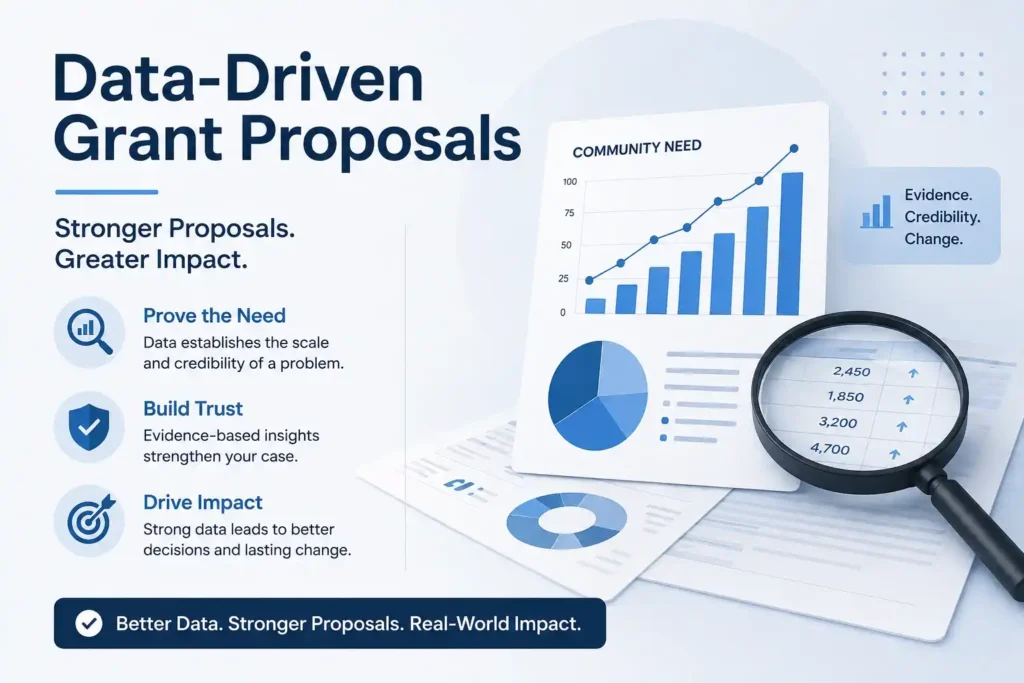
Blog Role of Storytelling in Data-Driven Grant Proposals September 4, 2026 No Comments Sarah T How Storytelling and Data Strengthen Grant Proposals Storytelling and data serve different purposes in a grant proposal. Data establishes the scale and credibility of a problem; storytelling helps reviewers understand what that problem means for real people. The strongest grant narrative uses both, credible evidence to prove the need, and ethical storytelling to make that need memorable. This guide covers everything you need to know about storytelling in data-driven grant proposals: Why Numbers Alone Rarely Win the Case Why Storytelling Matters in Grant Proposals What Makes Data-Driven Grant Proposals Effective How Storytelling and Data Work Together The Anatomy of a Compelling Grant Narrative How to Use Beneficiary Stories Ethically Turning Data Into a Story Reviewers Remember Quantitative vs. Qualitative Data in Grant Proposals What Grant Reviewers and Funders Look For Balancing Storytelling and Data in Grant Proposals Common Storytelling Mistakes in Grant Proposals How Professional Grant Writing Support Can Help Turning Data Into a Human-Centered Funding Story Frequently Asked Questions Why Numbers Alone Rarely Win the Case A grant proposal built entirely on statistics can feel accurate but distant. A proposal built entirely on stories can feel warm but unproven. Grant reviewers reading dozens of applications need both signals at once: evidence they can trust, and a reason to care. Every statistic or story should have a clear purpose. If it doesn’t strengthen the need, context, capacity, or expected outcomes, consider removing it. This is the core idea behind storytelling in grant proposals, using quantitative data to show that a problem is real and significant, then using a human story to show what that problem actually looks like for the people affected by it. Neither element replaces the other. A statistic explains scope; a story explains meaning. Why Storytelling Matters in Grant Proposals Reviewers are people first. A well-placed human story creates emotional connection and makes an otherwise abstract problem concrete. When a proposal opens with a statistic like “40 percent of families in this county lack reliable transportation,” the number is informative but hard to picture. Pair it with a short, specific description of one parent’s daily commute to a job across town, and the reviewer suddenly has a human face of the problem. That said, storytelling in grant proposals only works when it’s grounded. A story without supporting evidence can feel anecdotal, even manipulative. A statistic without a story can feel sterile. The relationship between logic and emotion in grant writing isn’t competitive, it’s sequential. Data earns trust. The story earns attention. Used together, they build a compelling narrative that reviewers actually remember after they’ve read the next ten applications. What Makes Data-Driven Grant Proposals Effective Data-driven grant proposals rely on more than a single statistic dropped into a needs statement. Effective proposals draw on several kinds of evidence: Quantitative data:Participant counts, percentage changes, baseline and outcome data that show scale Qualitative data: Testimonials, interview notes, and survey responses that explain experience Program data: Enrollment, attendance, and service delivery numbers specific to your organization Community data: Demographic or socioeconomic information describing the population you serve Research evidence: Published findings that support your program model or approach More data isn’t always better. Prioritize evidence that is current, relevant to your population and location, and directly connected to the proposed project. The goal isn’t to include every data point available. It’s to select the data that most directly supports your case for support, and to explain what each figure means rather than letting it sit unexplained on the page. What an Experienced Grant Professional Checks Before Writing the Narrative Before drafting, first identify the evidence that actually strengthens the funding case. Check whether the data is current, relevant to the population and geography, and directly connected to the proposed project. Also distinguish between need, organizational capacity, and results. Each type of evidence serves a different purpose. The same applies to beneficiary stories. The goal isn’t to choose the most dramatic story, but one that accurately illustrates the need and helps explain why the proposed program is a logical response. Ultimately, strong grant writing is about selecting the right evidence and connecting it clearly to the activities, outcomes, and funding request. How Storytelling and Data Work Together Use stories to illustrate the problem and data to establish its scale. Neither should be expected to do the other’s job. A useful way to think about structure is: Community need → Human story → Supporting evidence → Program solution → Expected outcomes → Funding request Here’s a simplified, illustrative example of how this might look in practice (the figures below are hypothetical, for demonstration only): A youth literacy nonprofit might open a section with a short vignette about a student who struggled to read at grade level. That story is followed by program data, for example, a hypothetical figure showing that a majority of participants in a similar tutoring model improved reading scores over one school year. The proposal then explains the tutoring approach, the expected outcomes for the coming cohort, and the specific funding request tied to staffing and materials. This sequence (story, then evidence, then solution) helps humanize data without distorting it. The story isn’t offered as proof; the data is. The story simply makes the data easier to understand and remember. The Anatomy of a Compelling Grant Narrative A strong proposal narrative borrows structure from storytelling without becoming fiction. It typically includes: An opening hook that grounds the reader in a real situation A clear problem statement, supported by evidence Community context that explains why the problem exists A described solution, your program design and approach Expected or demonstrated outcomes A specific funding request connected directly to that outcome The narrative should follow a clear logic: the evidence establishes the problem, the program addresses it, and the outcomes show whether the solution worked. This beginning-middle-end shape gives reviewers a throughline: what’s wrong, what you’re doing about it, and what will change if the grant
Grant Pipeline: How to Build, Manage, and Track a Nonprofit Grant Pipeline

Blog Grant Pipeline: How to Build, Manage, and Track a Nonprofit Grant Pipeline August 26, 2026 1 Comment GWC Build a Smarter Grant Pipeline A grant pipeline is a structured system nonprofits use to identify, qualify, track, prioritize, apply for, and manage grant opportunities from first contact through award and renewal. Rather than a static list of funders, it’s an active workflow that shows where every prospect stands and what needs to happen next. Most nonprofits don’t lose funding because they lack effort, they lose it because opportunities slip through the cracks. A missed deadline, an unqualified prospect that ate up staff time, or a lapsed renewal can all be avoided with a well-managed nonprofit grant pipeline. This guide covers everything you need to know about the grant pipeline: What Is a Grant Pipeline? Why Every Nonprofit Needs a Grant Pipeline Grant Pipeline Stages: From Prospect to Renewal How to Build a Nonprofit Grant Pipeline Finding and Qualifying Grant Opportunities Managing and Tracking Your Grant Pipeline Grant Pipeline Forecasting and Performance Metrics Common Grant Pipeline Mistakes to Avoid How Grant Writing Services Can Strengthen Your Pipeline Frequently Asked Questions Grant Pipeline Quick Facts Detail Information What Is a Grant Pipeline? System for tracking grant opportunities Primary Users Nonprofits and charitable organizations Main Purpose Manage prospects from research to renewal Key Pipeline Stages Prospecting, qualification, cultivation, application, award, reporting, renewal Key Information to Track Funder, amount, deadline, status, next action How Opportunities Are Found Directories, portals, foundations, corporations Prospect Qualification Factors Mission fit, eligibility, funding, effort, deadline Tracking Tools Spreadsheets, templates, grant software, CRMs Pipeline Forecasting Amount requested × success probability Important Metrics Prospects, applications, conversion rate, grant size Review Frequency Monthly or quarterly Primary Goal Better opportunities and stronger follow-through What Is a Grant Pipeline? A grant pipeline is more than a spreadsheet of funder names, it’s a living system that shows each prospect’s current stage, next action, and likelihood of moving forward. A simple grant list tells you who might fund you. A pipeline tells you where things stand and what to do next. A useful pipeline should make the next decision clear. For each prospect, identify what evidence is needed before moving forward, such as eligibility, fit, award size, deadline, and application requirements. For example, a small community nonprofit (hypothetical) might have twelve funders on its radar: three still being researched, four in active cultivation, two with applications in progress, two awaiting decisions, and one already funded and due for renewal. A pipeline captures that full picture in one place, connecting grant research, applications, decisions, and renewals into a single view rather than scattered notes. Why Every Nonprofit Needs a Grant Pipeline A consistent grant pipeline strategy supports: Predictable fundraising activity instead of last-minute scrambling Better planning around staff time and application capacity Funding diversification, reducing dependence on any single funder Stronger funder relationships through consistent follow-up Improved forecasting, since leadership can see what’s realistically in motion Long-term sustainability, because renewals and multi-year funding are tracked, not forgotten Organizations without a grant pipeline tend to chase whatever grant appears most urgent, which often means weaker mission fit and lower-quality applications. Grant Pipeline Stages: From Prospect to Renewal Most grant pipeline stages follow a similar grant lifecycle, though organizations customize the labels to fit their workflow. Pipeline Stage What Happens Key Information to Track Prospecting Identify potential funders Funder name, focus area, fit notes Qualification Assess eligibility and mission alignment Eligibility, program fit, funding priorities Cultivation Build the funder relationship Contact history, outreach notes Application Draft the grant proposal Requirements, budget, narrative status Submission Submit the completed application Submission date, confirmation Review Funder evaluates the request Expected decision date Award Funder approves or declines Award amount, decision date Reporting Fulfill post-award obligations Reporting deadlines, deliverables Renewal Reapply or steward for future funding Renewal timeline, relationship history Pipeline movement is different from administrative activity. Sending an email or opening an application does not mean a prospect has advanced. Each stage should have clear requirements for moving forward. Bottlenecks usually appear at qualification (too many low-fit prospects) and application (limited staff capacity), so it’s worth reviewing where opportunities tend to stall. How to Build a Nonprofit Grant Pipeline Step 1: Define Your Funding Goals Connect your funding targets to your nonprofit’s mission, strategic plan, and current program goals so the opportunities you pursue support your organizational priorities. Step 2: Identify Your Ideal Funders Identify potential funding sources that align with your nonprofit, including private foundations, corporate grantmakers, community foundations, and federal, state, or local government programs. Step 3: Conduct Grant Research Research each potential funder’s priorities, previous recipients, geographic requirements, typical award amounts, and application deadlines. Grant Research Services provide a structured approach to finding and evaluating relevant funding opportunities. Step 4: Build a Grant Prospect List Create a prospect list that records the funder name, grant opportunity, potential award amount, eligibility requirements, deadline, mission alignment, and next steps. Step 5: Qualify Your Prospects Evaluate each opportunity based on grant fit, funder alignment, eligibility, and the resources required to prepare a competitive application. Step 6: Prioritize Your Prospects Rank opportunities according to factors such as mission fit, potential award amount, likelihood of success, application effort, and deadline. Do not rank opportunities by award size alone. Consider fit, competitiveness, effort, timing, and strategic value. It can also help to classify prospects as pursue, cultivate, monitor, or decline. Step 7: Move Qualified Prospects Through the Pipeline Turn promising prospects into active opportunities by tracking application stages, deadlines, follow-up tasks, and next steps throughout the grant development process. The Grant Is Eligible. But Is It Worth Pursuing? Eligibility is only the starting point of grant qualification. A nonprofit can technically qualify for a grant and still decide that pursuing it is not the best use of its time and resources. Take a Free Grant Eligibility Check to confirm basic eligibility before you spend time evaluating whether the opportunity is worth pursuing. Before moving an opportunity into active application development, consider five practical factors:
Traditional Grant Databases vs. AI Grant Finder: How to Find Grants You Actually Qualify For

Blog Traditional Grant Databases vs. AI Grant Finder: How to Find Grants You Actually Qualify For August 24, 2026 No Comments GWC AI Grant Finder vs. Traditional Grant Database: Which Is Best? Traditional grant databases give you searchable grant listings you have to filter and review yourself. An AI grant finder uses your organization’s profile and project information to identify and prioritize potentially relevant funding opportunities. Neither guarantees eligibility, but one starts from your organization, and the other starts from a search box. This guide covers everything you need to know about successfully resubmitting a grant proposal: Why Finding the Right Grant Matters Traditional Grant Databases Examples of Traditional Grant Databases Problem With Traditional Grant Search What Is an AI Grant Finder? How AI Grant Matching Works Traditional Grant Databases vs. AI Grant Finder My Experience Using Grant Anchor AI Grant Score: A Faster Way to Prioritize Opportunities Why Profile-Based Grant Discovery Is Better How Grant Anchor Helps Organize the Research Workflow Deadline Tracking Application Tracking After You Find a Grant AI Grant Readiness: Should You Apply Yet? Traditional Grant Research vs. AI-Assisted Grant Research How to Find Grants You’re Truly Eligible For AI Grant Finder vs. Grant Database: Which Should You Choose? Common Mistakes to Avoid Frequently Asked Questions Why Finding the Right Grant Matters More Than Finding More Grants Finding a grant is not the hard part. Finding a grant that’s actually worth your time is. After 20-plus years as a grant strategist, I’ve spent more hours than I can count inside traditional grant databases, including running keyword searches, opening listing after listing, checking eligibility language, comparing deadlines, and trying to figure out which of the 40 results in front of me were worth a closer look. That process works. It’s also slow, repetitive, and heavily dependent on how well you happen to phrase your search. In recent years, AI-assisted grant discovery has started to change that workflow. Rather than starting with a keyword, AI grant finder starts with your organization. It considers your: Mission Funding needs Project goals It then searches outward for funding opportunities that appear to fit. I’ve used one of these platforms, Grant Anchor, as part of my own research process, and I’ll draw on that experience throughout this piece. The point of this article isn’t to declare grant databases outdated or to tell you an AI score means you’re getting funded. It’s to walk through, honestly, what each approach does well, where each one falls short, and how to combine them so you spend less time sorting through irrelevant listings and more time on opportunities that genuinely deserve your attention. Because the real goal was never to find more grants. It’s to find the ones worth pursuing. Traditional Grant Databases: What They Do Well Traditional grant databases remain a core part of grant research, and they shouldn’t be dismissed. At their best, they offer: Large collections of grant records and grant profiles Searchable funder information and grant details Filters for deadlines, funding amount, geographic eligibility, and organization type Advanced search and keyword search tools for narrowing large result sets A reliable research database for verifying funder history and past awards For grant professionals doing deep foundation research or trying to confirm the source information behind a specific opportunity, this kind of database is still the right tool. It’s comprehensive, it’s searchable, and for many funders, it’s the closest thing to an official record. Where these platforms struggle is not in what they contain, it’s in how much manual work it takes to get from “here’s a database of thousands of records” to “Here are the three that are most relevant to my organization.” Examples of Traditional Grant Databases and Search Resources A few well-known resources come up constantly in grant research, and it’s worth knowing what each is generally used for. Grants.gov: The official U.S. government source for federal funding opportunities. This is distinct from third-party databases; when you need to confirm a federal grant program’s actual terms, this is the authoritative source. Candid and Foundation Directory Online: Widely used for foundation research and private foundation prospecting. GrantStation: A grant search platform covering a mix of government, foundation, and corporate grants. GrantWatch: A searchable listing service covering grant opportunities for nonprofits, small businesses, and other applicant types. The Problem With Traditional Grant Search Manual grant research has a predictable shape: you pick keywords, run a search, and then read through the results one by one to figure out which ones are worth a second look. That approach runs into a few consistent limitations: Keyword-dependent search misses opportunities that use different language for the same funding priority. Manual filtering across funding amount, deadline, and eligibility criteria takes real time, especially across multiple grant databases. Search noise: Irrelevant grant results that technically match your keyword but not your mission, forces you to open listings just to rule them out. Repetitive searches are often needed because grant databases don’t share data, so a single research session can mean logging into several platforms with different search functionality. A database can show you grants. It can’t tell you which ones deserve your attention first. That gap is where a lot of grant research time quietly disappears. What Is an AI Grant Finder? An AI grant finder is a tool that uses an organization’s profile, including things like its: mission project goals organization type geographic location o surface funding opportunities that appear relevant, rather than requiring users to guess the right search terms. The shift is in the starting question. A traditional database answers: “Show me grants containing these keywords.” An AI grant finder is built to answer something closer to: “Show me funding opportunities that appear relevant to my organization and this project.” That distinction matters because grant relevance rarely lives in a single keyword. It lives in context, such as your industry, your applicant eligibility, your project’s scope, and the funder’s actual priorities. How AI Grant Matching Works AI grant matching generally relies on a handful