
Grants for Service Dogs: Financial Assistance, Programs & How to Apply (2026 Guide)
- August 21, 2026
- No Comments
- Sarah T
Understanding Service Dog Funding
A service dog can cost up to $50,000, and for most people, that’s where the journey stops. Service dog grants are financial awards provided by nonprofits, foundations, and government-linked programs to help cover the cost of a trained service dog for people with qualifying disabilities. Eligible recipients typically include veterans, individuals with physical or neurological conditions, and children with autism. Funding may cover acquisition fees, service dog training costs, and in some cases ongoing care expenses.
If you’re unsure whether you’re eligible, check your Grant Eligibility for free.
If a Service Dog Feels Out of Reach, You’re Not Alone

Getting a service dog can be genuinely life-changing. But for most families, the cost of a service dog sits somewhere between $15,000 and $50,000 — and that figure alone stops many people before they even start the process.
If you or someone you love has been told a service dog could help, but you’re staring down a price tag that feels impossible, you’re not alone. Millions of Americans with disabilities face the same wall every year. The gap between need and affordability is real, and it’s wide.
The good news is that grants for service dogs, nonprofit placement programs, and a growing landscape of disability assistance grants exist specifically to close that gap. This guide is designed to give you a clear, honest picture of what’s available, what the process actually looks like, and how to give yourself the best chance of receiving funding.
What Is a Service Dog?
A service dog is a highly trained animal that performs specific tasks directly related to a person’s disability. Under the Americans with Disabilities Act (ADA), a service animal is defined as a dog trained to do work or perform tasks for the benefit of an individual with a physical, sensory, psychiatric, intellectual, or other mental disability.
What is a service dog in practical terms? It depends on the person’s needs. Types of trained service dogs include:
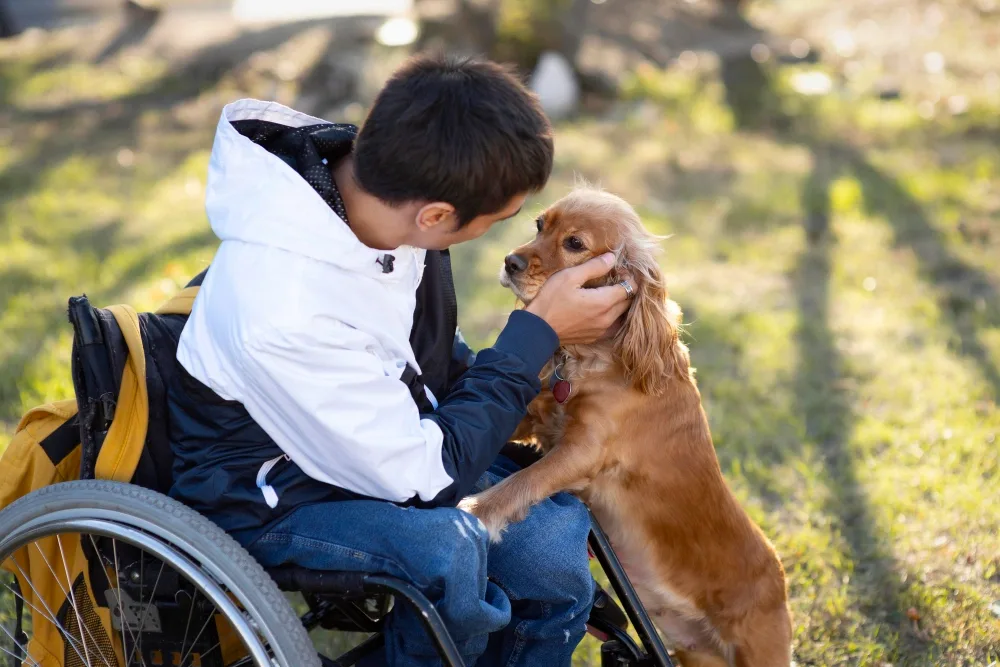
- Mobility Assistance Dogs: Help individuals with physical disabilities with balance, retrieving objects, opening doors, or pulling wheelchairs
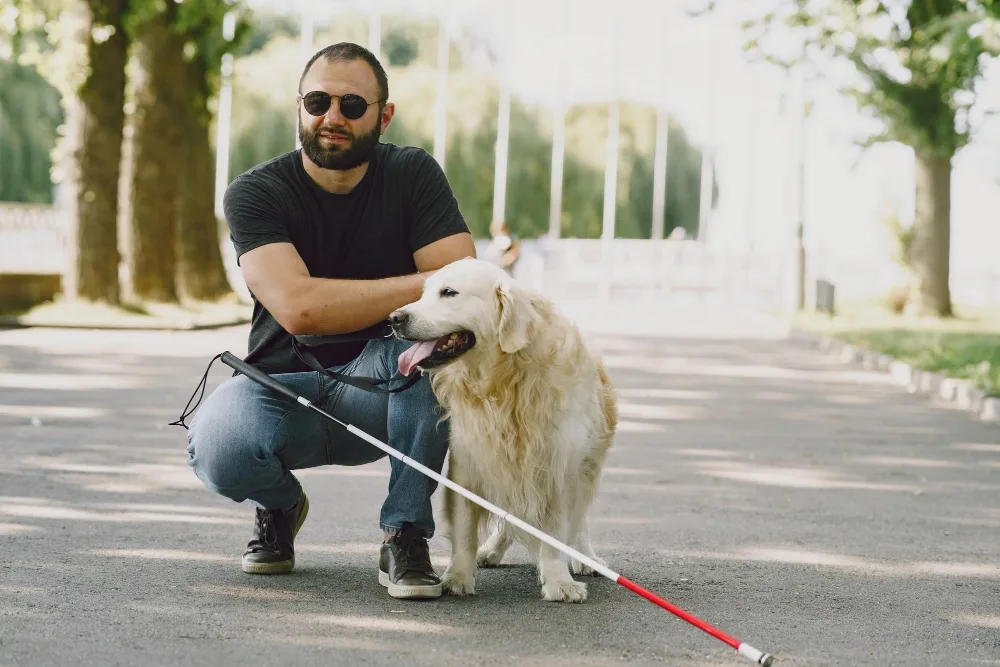
- Guide Dogs: Assist people who are blind or have severe visual impairments
- Hearing Assistance Dogs: Alert deaf or hard-of-hearing handlers to sounds like doorbells, alarms, or their name
- Medical Alert Dogs: Detect changes in blood sugar, oncoming seizures, or other physiological events before symptoms become dangerous
- Psychiatric Service Dogs: Support individuals with PTSD, severe anxiety, or other psychiatric conditions by performing tasks like room checks, interrupting harmful behaviors, or providing grounding during panic attacks
- Autism Support Dogs: Provide safety, emotional regulation support, and social anchoring for children and adults with autism spectrum disorder
Each of these roles requires months to years of specialized training, which is the primary reason costs are so high.
Cost of a Service Dog: Real Breakdown
The cost of a service dog is not a single number — it’s a layered financial commitment that extends well beyond the initial acquisition.
Initial acquisition and training
A fully trained service dog from a reputable program typically costs between $15,000 and $50,000. Some highly specialized dogs — such as those trained for seizure detection or complex mobility support, can exceed this range. Service dog training cost reflects hundreds of hours of professional instruction, behavioral testing, and public access preparation.
Service dog certification cost
While there is no federally mandated service dog certification in the U.S., many programs provide documentation and ID materials. Owner-training with a professional trainer can reduce upfront costs but still carries significant service dog training programs fees, often between $3,000 and $10,000.
Equipment and setup
Harnesses, vests, leashes, and specialized gear typically add $200–$600 upfront.
Ongoing service dog expenses
Daily care costs for a service dog — food, routine veterinary care, grooming, and licensing — average $1,500 to $3,500 per year. Over a dog’s working life of 8–10 years, long-term service dog expenses can add another $15,000–$30,000 to the total picture. Unexpected veterinary care or health issues can push this higher.
The financial burden of service dogs is substantial, and it disproportionately impacts the very people who need them most — individuals and families already navigating the economic strain of disability.
Why Financial Assistance for Service Dogs Is Important
Disability doesn’t come with a price filter. A veteran managing post-traumatic stress disorder shouldn’t have to choose between a trained service dog and paying rent. A parent of a child with autism shouldn’t need to spend years fundraising before accessing a tool that could dramatically improve their child’s safety and quality of life improvements.
Financial assistance for service dogs matters because:
Independence is at stake
For someone with a mobility impairment, a service dog isn’t a luxury — it’s the difference between being able to live alone and needing around-the-clock support. Independent living support through service animals reduces long-term care costs and increases self-determination.
Equity in access
Without funding options, service dogs become available only to those who can afford them outright. Grants and nonprofit programs are an equity mechanism.
Mental health and wellbeing
For individuals with PTSD, anxiety disorders, and autism, a service dog for PTSD veterans or an autism support dog provides daily stability, reduced symptom severity, and measurable improvements in social function.
Reduced dependence on clinical services
People paired with trained service dogs often report fewer hospitalizations, less reliance on medication adjustments, and reduced need for in-home care.
Types of Service Dog Funding Options
Understanding the landscape of funding helps you build a realistic strategy. There is no single source that covers everything, and most successful applicants combine multiple streams.
Grants
Grants are one-time or periodic financial awards that do not need to be repaid. Service dog grant programs may cover the full cost of placement or provide partial cost assistance.
Nonprofit placement programs
Nonprofit placement programs are organizations that breed, train, and place service dogs directly with qualified applicants — often at low or no cost. The dog is the funding. Wait times can be long, but the financial barrier is often lowest.
Scholarships
Scholarships are competitive awards from foundations or service dog organizations specifically targeting individuals with demonstrated financial need.
Government assistance
Government assistance includes federal disability assistance programs and state assistance programs. While the federal government does not currently have a dedicated service dog grant program, some Medicaid waivers, VA benefits, and state vocational rehabilitation programs may cover costs.
Fundraising
Fundraising — including community fundraising and crowdfunding for service dogs — fills gaps that institutional programs leave behind.
Average Cost of a Service Dog
Cost Category |
Estimated Cost |
|---|---|
Initial acquisition & training
|
$15,000 – $50,000+
|
Specialized training (advanced cases)
|
Can exceed $50,000
|
Owner-training with professional help
|
$3,000 – $10,000
|
Certification & documentation
|
Varies (often minimal or included)
|
Equipment & gear
|
$200 – $600
|
Annual care costs
|
$1,500 – $3,500 per year
|
Lifetime care (8–10 years)
|
$15,000 – $30,000+
|
Unexpected medical expenses
|
Variable / can be significant
|
These numbers can vary, but they give you a realistic picture of why grants are so important.
Best Grants for Service Dogs in 2026
These are among the most well-established and accessible grant programs and nonprofits currently providing financial assistance for service dogs in the United States.
Assistance Dogs International (ADI)
Assistance Dogs International (ADI) is the global accrediting body for assistance dog organizations. While ADI itself does not award grants directly, its member organizations adhere to rigorous training and placement standards. Using the ADI member directory is one of the most reliable ways to identify legitimate, accredited programs.
Canine Companions for Independence
Canine Companions for Independence (now Canine Companions) is one of the largest nonprofit service dog organizations in the U.S. It provides highly trained service dogs at no cost to recipients. Applications are competitive, and the service dog waiting list can extend to 18 months or more, but the program is among the most respected in the country.
Paws With A Cause
Paws With A Cause provides trained service dogs to individuals with disabilities across the U.S. at no cost. Assistance dog programs offered include hearing dogs, service dogs, and seizure response dogs.
Guide Dogs for the Blind
Guide Dogs for the Blind provides guide dogs and follow-up support to qualified individuals at no charge. The Seeing Eye provides guide dogs to people who are blind, and has been operating for nearly a century — it is one of the oldest and most trusted programs of its kind.
NEADS World Class Service Dogs
NEADS World Class Service Dogs offers service dogs for veterans, children, and individuals with physical disabilities or hearing impairments — typically at no cost to recipients.
K9s For Warriors
K9s For Warriors provides service dogs for PTSD veterans and others with trauma-related conditions at no cost to qualifying veterans.
The Mission K9 Rescue Foundation and Freedom Service Dogs are additional nonprofit service dog organizations that provide service dog cost assistance through placement or funding programs.
For families seeking service dog funding for children, Canines for Disabled Kids (now part of broader pediatric service dog networks) and several ADI-accredited pediatric programs offer specialized placements.
Service Dog Grants for Specific Needs
Veterans and PTSD
Service dog grants for veterans represent some of the most robust funding available in this space. The U.S. Department of Veterans Affairs (VA) has expanded its coverage of psychiatric service dogs, and several specialized nonprofits exist solely to serve veterans. The HISA Grant for Veterans may also help eligible veterans offset certain home modification costs that support disability-related needs, complementing other assistance programs.
K9s For Warriors, Paws for Purple Hearts, and PTSD Foundation of America are among the charities that provide service dogs for PTSD veterans. The VA’s Veteran Directed Care program and certain state-level veteran service organizations may also provide service dog cost assistance.
If you are a veteran seeking a service dog for PTSD or combat-related trauma, start with your VA healthcare coordinator, who can document your need and connect you with VA-approved assistance dog programs.
If your VA appeal has recently been granted, you may also want to review the next steps in detail in our guide on What You Must Do After Your VA Appeal Is Granted.
Autism
Service dog grants for autism are available through organizations such as 4 Paws for Ability, Autism Service Dogs of America, and several regional nonprofits. Many programs specifically address service dogs for autism support needs, including safety tethering for children who may wander, sensory grounding, and social facilitation.
In addition to these supports, Housing Grants for Families with Autism may help families secure or modify stable living environments that better support a child’s daily care and long-term needs.
Service dog funding for children with autism is often available through state developmental disability programs, Medicaid waiver funding, and autism-specific foundations. Parents should work with their child’s behavioral health team to document needs as part of the application process.
Physical Disabilities
For individuals with mobility impairments, spinal cord injuries, multiple sclerosis, or other conditions affecting movement, mobility assistance dogs are available through programs like Canine Companions, NEADS, and Freedom Service Dogs. Service dog grants for disabilities related to physical impairment are also available through many state vocational rehabilitation agencies, which may fund training when a service dog is determined to be a necessary vocational support.
Government and Disability Assistance Programs
There are no federal grants for service dogs programs in the traditional sense, but several government pathways provide real financial support.
VA Benefits (Veterans Affairs)
The VA covers costs related to service dogs for qualifying veterans, including veterinary care in some circumstances. This is one of the most direct forms of government grants for service dogs available.
State Vocational Rehabilitation Programs
State assistance programs through vocational rehabilitation (VR) offices can fund service dogs when they support a person’s ability to maintain or obtain employment.
Medicaid Home and Community Based Services (HCBS) Waivers
Some states include service dog acquisition or training in their Medicaid waiver services. Coverage varies dramatically by state.
Social Security and ABLE Accounts
While Social Security does not fund service dogs directly, individuals with disabilities can use ABLE account savings (tax-advantaged accounts for disability expenses) to cover service dog costs without affecting SSI or Medicaid eligibility.
Federal Disability Assistance Programs through HUD may also support independent living costs, indirectly freeing up personal funds for service dog acquisition.
Nonprofit Service Dog Organizations
- Assistance Dogs International (ADI)
- Canine Companions
- Paws With A Cause
- Guide Dogs for the Blind
When evaluating service dog organizations in the USA, look for accreditation status, transparent financial records, and clear information about their service dog placement process and post-placement support.
Free and Low-Cost Service Dog Programs

Free service dog programs typically operate through nonprofit placement organizations. The dog, training, and placement are funded through donations, and the recipient pays nothing — or a nominal fee of a few hundred dollars.
Low cost service dog programs often involve owner-training models with subsidized professional guidance, or programs that provide partial funding toward a privately sourced dog.
Eligibility for free programs is competitive and usually requires demonstration of medical need, financial need, and sometimes geographic residency requirements. Waiting periods can extend from six months to two or more years.
Important limitation: “Free” does not mean without cost forever. Ongoing veterinary care, food, and equipment remain the handler’s responsibility regardless of how the dog was acquired.
How to Apply for Service Dog Grants: Step-by-Step
Understanding the service dog grant application process — and preparing thoroughly — is what separates successful applicants from those who wait years without forward movement.
Step 1: Identify Programs That Match Your Profile
Start by listing your disability type, income level, and geographic location. Use the ADI member directory, VA resources, and disability-specific nonprofit databases to identify programs for which you are realistically eligible.
Step 2: Verify Eligibility Before Applying
Each program has specific service dog grant eligibility criteria. Read them carefully. Common requirements include: documented disability diagnosis, income below a certain threshold, U.S. residency, and a home environment assessment confirming the applicant can care for a dog.
Step 3: Gather Required Documentation
Service dog documentation requirements typically include a letter of medical necessity from your physician, proof of diagnosis, income verification, photo ID, and personal statement explaining how a service dog would address your functional limitations.
Step 4: Complete the Application Form Carefully
Many service dog grant application forms include open-response sections asking you to describe your daily challenges in detail. Be specific. Describe what tasks you cannot perform independently and how a trained service dog would address each.
Step 5: Follow Up Appropriately
After submission, send a brief confirmation inquiry within two weeks to verify receipt. Note the stated service dog grant deadline and review timeline.
Step 6: Combine Funding Sources
Approval from one program does not preclude applying to others. Many recipients piece together funding from a nonprofit placement program, a state assistance program, and personal fundraising simultaneously.
How Grant Experts Can Help
The landscape of service dog funding programs is genuinely complex. Eligibility rules differ between programs, deadlines shift, and application requirements change year to year. Many applicants spend months pursuing programs for which they were never eligible — or miss legitimate opportunities because they didn’t know where to look.
Working with an experienced disability grant writing company can streamline the entire process. An expert grant writing service will assess your profile honestly, match you with the highest-probability programs, help you prepare documentation that meets specific requirements, and build a multi-source funding strategy that accounts for realistic timelines.
For families already managing the weight of a disability — for veterans navigating bureaucratic systems, for parents advocating for their children — reducing this burden has real value.
If you’re unsure where to begin, an initial consultation with a grant research professional focused on disability and medical assistance funding is a reasonable first step before investing time in applications you may not qualify for.
Eligibility Requirements Explained
Service dog grant eligibility varies by program but typically includes:
- Disability verification requires documentation from licensed provider confirming need for service dog
- Income thresholds prioritize individuals with financial need, typically households earning below 300% of the federal poverty level (varies by program)
- Functional need requires demonstrating specific limitations caused by the disability that a trained service dog can address
- Handler capability involves the ability to physically and logistically care for a service dog, including stable housing and daily care
- Age requirements depend on the program, with some serving only children and others only adults
If you want more details about grant requirements, check out our blog on Grant Requirements: Important Eligibility Rules.
Service Dog Placement and Waiting Process
The service dog matching process involves careful pairing of a trained dog’s temperament, skills, and energy level with the handler’s needs and lifestyle. Once matched, recipients attend a required 1–3 week “team training” program to learn how to work with their dog.
Waiting lists at reputable nonprofits typically range from six months to over two years due to high demand. During this time, applicants should stay in touch with the program and update any changes.
Support continues after placement, with follow-up services, regular assessments, and help coordinating veterinary care throughout the dog’s working life.
Emotional Support Dog vs Service Dog: An Important Distinction
Feature |
Service Dog |
Emotional Support Animal (ESA) |
|---|---|---|
Primary Role
|
Trained to perform specific tasks related to a disability
|
Provides comfort through companionship
|
Training
|
Requires specialized, task-based training
|
No specific training required
|
Legal Protection (ADA)
|
Fully protected; allowed in public places (stores, restaurants, hospitals, etc.)
|
Not protected under ADA; no public access rights
|
Housing Rights (Fair Housing Act)
|
Protected
|
Limited protections
|
Air Travel (Air Carrier Access Act)
|
Some protections (with recent limitations)
|
Generally not protected
|
Public Access
|
Allowed in most public spaces
|
Not allowed beyond pet-friendly areas
|
Funding Eligibility
|
Eligible for grants, nonprofit programs, and assistance
|
Not eligible for most funding programs
|
Legal Risk
|
Legitimate use is protected
|
Misrepresenting as a service dog is considered fraud
|
Medical Justification
|
Requires documented disability and functional need
|
Typically supported by a general mental health recommendation
|
Key takeaway:
Service dogs are highly trained medical support animals with legal protections and funding options, while ESAs provide emotional comfort but have limited legal recognition and no specialized training requirements.
Challenges and Limitations of Grants
It would be dishonest to present grants as an easy solution. Understanding the real limitations helps you plan more effectively.
- Limited funding availability
- Long wait times
- Many Assistance Programs cover only Partial Cost
- Geographic limitations
- Narrow eligibility windows
- Scams exist, so stay alert
Alternative Ways to Fund a Service Dog
When institutional grants fall short, these approaches fill the gap:
- Crowdfunding for service dogs
- Community fundraising
- Service clubs
- Foundation donates programs
- Veteran service organizations
- Medical crowdfunding
The most successful funding efforts combine multiple channels simultaneously.
How Service Dogs Change Lives
It is easy to talk about service dogs in terms of tasks and funding mechanisms. The reality is more human than that.
- Veterans with PTSD can return to public places like stores, schools, and restaurants.
- Children with autism may experience better sleep and reduced safety risks like wandering.
- People with epilepsy gain more independence and confidence living alone.
- Well-matched service dogs consistently improve quality of life, backed by research and experience.
- Their impact is often life-changing, restoring independence and emotional stability.
- Many handlers regain identity and confidence affected by long-term disability.
- These benefits make funding and access barriers especially significant.
Should You Apply for a Service Dog Grant?
If you are asking whether to apply, the answer is almost certainly yes — with some important considerations.
You should apply if:
- You have a documented disability and a service dog could perform specific tasks for you.
- You can reliably care for a dog every day.
- Your housing situation is stable.
- You are prepared for a process that may take months or even years.
You may want to prepare further if:
- Your medical documentation is incomplete.
- Your housing situation is unstable.
- You are unsure whether you need a service dog or an ESA.
- Your requirements are not clear.
Getting Better Application Results
- Guidance from an experienced advisor can improve your chances of approval.
- Understanding different grant programs and eligibility rules is important.
- Strong documentation tailored to program requirements can make a difference.
- Many applicants are approved after improving or strengthening their initial applications.
Conclusion
The cost of a service dog is real, the need is real, and the path to funding — while not simple — is navigable.
Grants for service dogs, nonprofit placement programs, government disability assistance, and community fundraising together make up an ecosystem that has helped tens of thousands of Americans access the support they need. No single path works for everyone, and most successful applicants combine multiple funding streams over a period of months.
Start by documenting your medical needs clearly. Research ADI-accredited programs that match your disability type. Contact your state’s vocational rehabilitation office and VA if you are a veteran. Build a parallel funding strategy that doesn’t rely on any single approval.
You may not get a service dog tomorrow. But with the right approach, the right documentation, and persistence, the gap between where you are and where a trained service dog could take you is crossable.
Frequently Asked Questions
How do I get a service dog for free?
Nonprofits like Canine Companions, K9s For Warriors, and Paws With A Cause provide trained service dogs at no cost to qualified applicants. You usually need strong medical documentation and should apply to multiple programs.
Are service dog grants legit?
Yes, but be careful. Only trust registered nonprofits and accredited organizations. Avoid anyone asking for fees to “guarantee” a dog or grant.
How long does it take to get a service dog?
Usually 12 months to 3 years, depending on the program, matching process, and training timeline.
Can I apply for service dog grants if I have a low income?
Yes. Many programs prioritize low-income applicants who meet medical and eligibility requirements. Low-income individuals and families are often the primary beneficiaries of these programs, not an exception.
What’s the difference between a service dog and an emotional support animal?
Service dogs are trained to perform specific tasks for disabilities, while emotional support animals provide comfort but require less formal training.
Need Help?
Contact our grant writing experts today to get your right Professional Grant Writer

Author-Sarah T
Grant Research Analyst
Sarah T. is a Grant Research Analyst with more than 18 years of experience researching grant programs and funding opportunities for small businesses, nonprofits, startups, and entrepreneurs. She specializes in reviewing eligibility requirements, analyzing funding guidelines, and monitoring updates to government, corporate, and foundation grant programs. Her work focuses on producing accurate, well-researched funding resources by verifying information against official grant announcements, program guidelines, and funding agency documentation. Through her research, she helps readers understand grant eligibility, application requirements, deadlines, and program criteria with clear, reliable, and up-to-date information.
Reviewed By-Emily Carter
Newsletter
Latest Post
-
 D-Prize Global Pitch Grant: Eligibility, Funding Amount, Challenges, and How to Apply in 202623 Oct 2026
 -
Business Freedom Grant: Eligibility, Application Process, Requirements, and Funding Opportunities in 202621 Oct 2026
-
Multifamily Housing Rental Assistance: Programs, Eligibility, and How to Apply in 202619 Oct 2026