
My Teeth Are Rotting and I Have No Money: Free & Low-Cost Dental Care Options in 2026
- August 21, 2026
- No Comments
- Michelle Bennett
Rotting Teeth, No Money? Free Help Exists
If your teeth are rotting and you can’t afford a dentist, you’re not out of options. Free and low-cost dental care exists through community health clinics, dental schools, Medicaid, nonprofit organizations, and sliding-scale programs. Your first step is finding a Federally Qualified Health Center (FQHC) near you using HRSA’s clinic finder at findahealthcenter.hrsa.gov. Help is real, available, and closer than you think.
No Money for a Dentist? Here’s How to Get Free or Affordable Dental Care
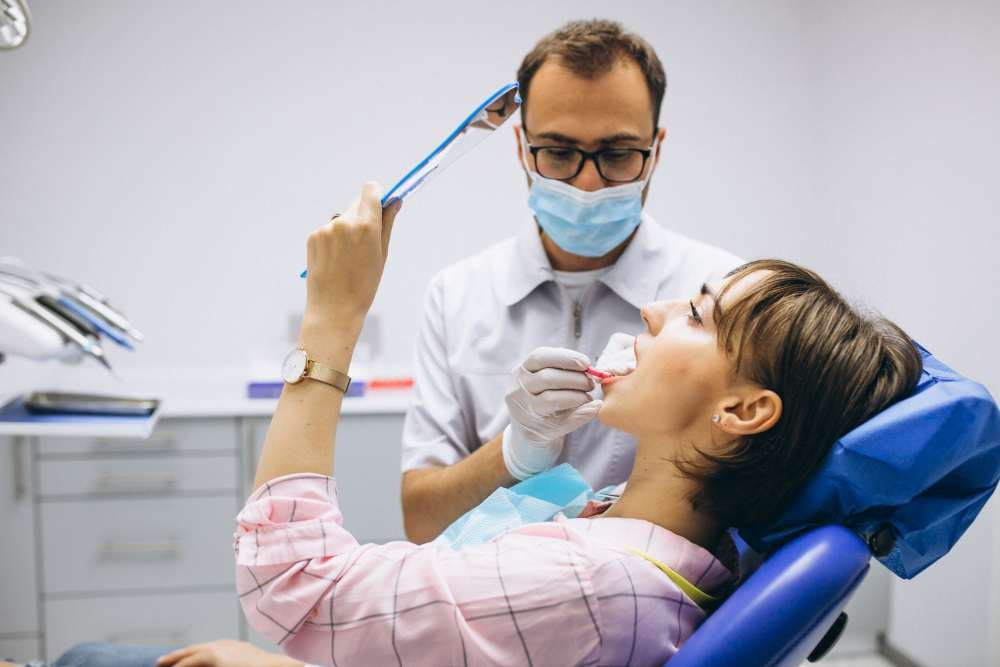
There’s a specific kind of dread that comes with looking in the mirror and knowing something is seriously wrong with your teeth — and knowing you have no way to pay for it. Maybe you’ve been avoiding smiling in photos. Maybe you’re eating only on one side of your mouth. Maybe the pain woke you up at 3 a.m. again, and you searched for something like “my teeth are rotting and I have no money” just hoping someone, somewhere, had an answer.
This article is for you.
You’re not alone, and you’re not beyond help. According to the CDC, more than 1 in 4 American adults have untreated tooth decay, and nearly 1 in 3 adults under 65 have no dental insurance. Dental neglect is not a personal failure — it is a systemic one. Dental care has been kept separate from standard health insurance for decades, making it unaffordable for millions of working people, seniors, and families.
What follows is a practical, honest guide to getting your teeth taken care of — even if your bank account is empty.
Is This a Dental Emergency?
When tooth decay becomes dangerous
Not every cavity is life-threatening, but advanced decay can turn serious fast. If bacteria reach the root of the tooth, it can create an abscess, which is a pocket of infection. According to the Centers for Disease Control and Prevention (CDC), untreated dental infections can spread to surrounding tissues and, in severe cases, lead to serious health complications if not addressed. This is why dental infections are considered a serious medical concern when they become severe.
Infection and spreading risks
Swelling in the face, fever, difficulty swallowing, or throbbing pain are signs that infection may be spreading. At this stage, waiting is risky. Emergency care is needed even if you have no money, because hospitals can at least stabilize infections with antibiotics while you figure out dental treatment.
What To Do Immediately If Your Teeth Are Rotting
For everyone — if the situation is painful but not acutely dangerous, here’s what to do in the next 24–72 hours:
Step 1: Call 211 (United Way's helpline)
Tell them you need emergency dental care and have no insurance. They will direct you to local resources you may not know exist.
Step 2: Search for a Federally Qualified Health Center (FQHC)
These federally funded clinics offer dental care on a sliding-scale fee — meaning you pay only what you can afford, sometimes as little as $0–$20.
Step 3: Do not delay
Rotting teeth don’t stabilize on their own. Every week you wait, the likelihood of needing a more expensive and invasive procedure increases.
What To Do Immediately If Your Teeth Are Rotting
For everyone — if the situation is painful but not acutely dangerous, here’s what to do in the next 24–72 hours:
Step 1: Call 211 (United Way's helpline)
Tell them you need emergency dental care and have no insurance. They will direct you to local resources you may not know exist.
Step 2: Search for a Federally Qualified Health Center (FQHC)
These federally funded clinics offer dental care on a sliding-scale fee — meaning you pay only what you can afford, sometimes as little as $0–$20.
Step 3: Do not delay
Rotting teeth don’t stabilize on their own. Every week you wait, the likelihood of needing a more expensive and invasive procedure increases.
Signs of Severe Tooth Decay or Infection
Know when to treat this as an emergency (according to the American Dental Association):
- Throbbing pain that doesn't stop, especially at night
- Swelling in your jaw, cheek, or neck
- Pus or a bad taste coming from around a tooth
- Fever above 101°F combined with dental pain
- Difficulty opening your mouth or swallowing
- Sensitivity to hot or cold that lingers more than a few seconds
- A tooth that has turned dark gray or black
- Visible holes in teeth or teeth that are visibly breaking apart
Dental Grants for Low-Income Adults

Oral Health Grants are funds you do not need to repay — specifically allocated to help people access dental care they couldn’t otherwise afford.
Here’s where real grants exist:
State Dental Associations
Many state dental associations run grant programs for low-income residents.
HealthWell Foundation
Provides financial assistance including dental grants for people with chronic conditions.
NeedyMeds
A database of patient assistance programs including dental grants. You can search by condition or type of help needed.
RxHope and Partnership for Prescription Assistance
While primarily medication-focused, some include dental supply assistance.
Local Community Foundations
Many counties have community foundations that offer small grants for medical and dental expenses.
Be aware that grant funding is limited and competitive. Apply to multiple programs simultaneously and follow up regularly.
Dental Care for Low-Income Individuals
Free dental care exists in more places than most people realize. Here’s where to look:
Federally Qualified Health Centers (FQHCs)
These are the single best starting point for uninsured, low-income adults. They receive federal funding specifically to serve people regardless of ability to pay. Services include cleanings, fillings, extractions, and sometimes dentures. Use HRSA’s locator to find one near you.
Dental Clinics
Many cities host periodic free dental clinics run by volunteer dentists. Organizations like Remote Area Medical (RAM) and Mission of Mercy host large-scale free dental events. Check their websites for upcoming events in your region.
United Way 211
Dialing 211 connects you to a human being who can tell you what’s available in your specific county — including programs that don’t show up easily in Google searches.
Local Health Departments
Your county or city health department often maintains a list of free or reduced-cost dental providers. Call them directly.
Government Dental Assistance Programs
Medicaid
If you qualify for Medicaid based on income, dental coverage may be included — though the scope varies by state. Some states cover only emergency extractions; others cover comprehensive care including dentures.
CHIP (Children's Health Insurance Program)
If you have children under 19, CHIP almost always includes dental coverage.
Medicare
Traditional Medicare does NOT cover routine dental care, which is a cruel gap in coverage for seniors. However, some Medicare Advantage (Part C) plans do include dental — review your plan carefully or call 1-800-MEDICARE.
VA Dental Benefits
If you’re a veteran, you may qualify for free VA dental care depending on your service-connected disability rating, POW status, or other qualifying conditions. Contact your local VA medical center.
Indian Health Service
If you are an American Indian or Alaska Native, the Indian Health Service provides dental care at no cost. Find your nearest facility at ihs.gov.
Nonprofit & Charity Dental Programs
Several national nonprofits exist specifically to connect people with free or subsidized dental care:
Dental Lifeline Network
This organization runs the “Donated Dental Services” (DDS) program, which matches people with disabilities, elderly individuals, and medically fragile patients with volunteer dentists who provide comprehensive dental care.
America's Dentists Care Foundation
Hosts Mission of Mercy events across the country — large, free dental clinics where volunteer dentists provide extractions, fillings, cleanings, and more on a first-come, first-served basis. No ID or insurance required at most events.
American Dental Association Foundation
Funds programs that expand access to dental care for underserved populations. While they don’t provide direct patient care, they fund many of the programs listed here.
Smiles Change Lives
Focuses on orthodontic care for children and teens from low-income families. If you have a child who needs braces and can’t afford them, check Smiles Change Lives program.
Give Kids a Smile
The ADA’s annual program provides free dental care to children from low-income families. Dentists across the country participate each February.
Dental Schools & Low-Cost Clinics
Dental school clinics are one of the most underutilized resources available. Students at accredited dental schools — working under close supervision of licensed faculty — provide dental services at dramatically reduced rates, often 50–80% less than private practices.
The work takes longer because students are learning, but the quality is closely monitored and generally excellent. Services typically include X-rays, cleanings, fillings, extractions, root canals, crowns, and dentures.
To find one near you, search “dental school clinic” plus your state, or visit the official website for the ADA’s directory of accredited schools.
Sliding Scale & Community Health Clinics
Sliding scale means the amount you pay is calculated based on your income and family size. At some clinics, someone earning below the poverty level pays nothing at all. Someone earning slightly above pays a small fee. No one is turned away because of inability to pay.
Beyond FQHCs, look for:
- Community Health Centers (CHCs): Similar to FQHCs but may be state or locally funded
- Free Clinics: Often run by religious organizations or medical volunteers
- Rural Health Clinics: Specifically serve rural areas with limited provider access
When you call, you can simply say that you don’t have insurance and your income is limited, and ask whether they provide reduced or sliding-scale fees. Most places will respond directly and let you know what proof or documents you need to bring.
Free Tooth Extraction, Dentures & Implants Programs
Free Tooth Extractions
FQHCs, dental schools, and free clinic events often include extractions. For people in severe pain with a tooth beyond saving, an extraction is frequently the most affordable path forward. At a dental school, extractions can cost as little as $15–$75.
Free or Low-Cost Dentures
The Dental Lifeline Network’s DDS program includes dentures for qualifying individuals. Some dental schools offer complete or partial dentures at reduced rates. Medicaid in many states covers dentures for qualifying adults.
Dental Implants
These are rarely free, even through nonprofit programs, because they are expensive to provide. If implants are necessary, dental school programs offer them at significantly reduced rates — sometimes $1,000–$2,500 versus $3,000–$5,000 at private practices. Some nonprofit programs exist for specific populations (veterans, cancer survivors) — ask specifically when reaching out to organizations.
How to Apply for Dental Grants (Step-by-Step)

Step 1 — Research programs that match your situation
Are you elderly? Disabled? A veteran? A child? Single parent? Many grants are tailored to specific populations.
Step 2 — Check eligibility before applying
Most programs have income limits (often 200% of the federal poverty level), geographic restrictions, and specific qualifying conditions. Reading eligibility requirements carefully saves time for everyone.
Step 3 — Gather your documents
Common requirements include: proof of income (pay stubs, tax return, benefits letter), proof of residency, ID, and sometimes a referral from a social worker or healthcare provider.
Step 4 — Apply to multiple programs simultaneously
Funding is limited and demand is high. Don’t wait for one response before applying to others.
Step 5 — Follow up
Many programs are under-resourced. A polite follow-up call two weeks after submitting demonstrates seriousness and keeps your application visible.
Step 6 — Ask your dentist
Some dentists participate in direct grant programs or know of local resources that aren’t publicly advertised. It’s worth asking directly: “Do you know of any assistance programs or grants for patients who can’t afford care?”
Alternative Ways to Get Help
Crowdfunding
GoFundMe campaigns for dental work have successfully raised funds for thousands of people. Be honest, specific about your situation, and share widely. Including photos of your situation (if comfortable) and specific cost estimates increases success rates.
Local churches and faith communities
Many congregations have discretionary funds specifically for community members in crisis. You don’t have to be a member to ask.
Social workers
If you’re already connected to any social services, mental health services, or housing assistance, your social worker may know of dental assistance you haven’t heard of. Ask explicitly.
Employer assistance programs
Some employers have Employee Assistance Programs (EAPs) that include referrals to financial assistance for medical and dental emergencies — even part-time employees sometimes qualify.
What If You Need Emergency Dental Care With No Money?
- Go to an FQHC — most have same-day or next-day emergency slots. Explain you're in pain. They will prioritize you.
- Call 211 and specifically ask for emergency dental resources.
- Check for RAM or Mission of Mercy events in your area — some specifically serve emergency cases.
- Hospital ERs won't do dental work, but if you have signs of spreading infection (fever, swelling, difficulty swallowing), go. They can prescribe antibiotics and pain management and will treat you regardless of ability to pay. Ask about the hospital's charity care program before leaving — you may qualify for financial assistance that zeroes out your bill.
- Dental schools sometimes accept walk-in emergency cases — call and ask before you drive.
Common Challenges & Limitations
Being realistic here matters. Some honest truths:
Waiting lists are real
The Dental Lifeline Network DDS program, for instance, can have wait times of several months in some states.
Funding runs out
Free clinic events are first-come, first-served. Grant funding is finite — programs sometimes close mid-year when funds are exhausted.
Geographic disparities
Rural areas have significantly fewer options than urban centers. If you’re rural, dental school clinics and telehealth dental consultations (for triage and referral) may be your best starting points.
Limited scope
Some free programs cover only extractions, not restorative work. You may need to use multiple resources to address different aspects of your dental health.
None of this means giving up. It means applying early, applying often, and asking for help from multiple directions at once.
Can You Fix Your Teeth With No Money?
Honestly? You can get significant help, and in some cases complete care — but it takes effort, persistence, and realistic expectations.
Free and low-cost programs can address: emergency extractions, infection treatment, basic fillings, cleanings, and in some cases dentures. What is harder to access for free: high-end cosmetic work, implants, or complex orthodontics.
But here’s what’s true: millions of people have started from the same place you’re in right now — in pain, embarrassed, broke — and accessed real care through the programs described in this guide. The path forward is not always fast or easy, but it exists.
Should You Seek Professional Help Immediately?
Yes — especially if you have any of these:
- An abscess (swelling, pus, severe pain)
- Fever with dental pain
- A tooth that has broken and is cutting your tongue or cheek
- Signs of spreading infection
For these, don’t wait for a grant to come through. Go to an FQHC, call 211, or go to an ER if necessary. Everything else — restorative work, cosmetic concerns, replacing missing teeth — can be addressed through the slower process of grants, dental schools, and sliding-scale clinics.
Conclusion
Your teeth can be fixed. Maybe not all at once, maybe not for free in every case — but the resources to get meaningful help exist, and you deserve to access them.
Start today. Call 211. Visit findahealthcenter.hrsa.gov. Look up the nearest dental school. Apply to the Dental Lifeline Network. Search for the next Mission of Mercy event in your region.
The pain you’re in right now is not permanent, and the shame you may feel is not deserved. Millions of people are in exactly the same situation. The difference between those who get help and those who don’t is usually just taking that first step — making the first call, submitting the first application.
You’ve already done something important by reading this far. Now take the next step.
Frequently Asked Questions
What should I do if I can't afford a dentist?
Start by looking for dental assistance grants and patient aid programs that help cover the cost of treatment. These include nonprofit dental grants, state dental association assistance programs, and patient support foundations that provide funding for low-income individuals. Dental schools are another excellent option for reduced-cost comprehensive care.
Are free dental programs legitimate?
Yes. Programs like the Dental Lifeline Network, Mission of Mercy, and FQHCs are established, vetted organizations with long track records. Always verify any program through its official website or by calling directly.
How long does it take to get help through these programs?
It varies significantly. An FQHC may be able to see you within days for an emergency. The Dental Lifeline Network’s DDS program may take several months. Dental school appointments for non-emergency care are often available within 1–4 weeks. Applying to multiple resources simultaneously is the best strategy for getting help quickly.
Are dental schools safe for treatment?
Yes, procedures are done by students under strict supervision from licensed dentists.
Does Medicaid cover dental care for adults?
It depends on your state. All states cover emergency dental for adults under Medicaid, but coverage for preventive and restorative care varies widely. Check your state’s Medicaid dental benefits specifically — your state Medicaid office or healthcare.gov enrollment specialist can tell you exactly what’s covered.
Need Help?
Contact our grant writing experts today to get your right Professional Grant Writer

Author-Michelle Bennett
Lead Proposal Writer
Michelle Bennett is a Lead Proposal Writer with more than 17 years of experience writing persuasive grant proposals for nonprofits, small businesses, startups, educational organizations, and community initiatives. She specializes in transforming complex projects into clear, compelling narratives that align with funder priorities and evaluation criteria.
Her work focuses on developing customized grant proposals, strengthening project narratives, and ensuring every application communicates measurable outcomes, organizational capacity, and long-term impact. Through strategic storytelling and careful attention to detail, she helps clients submit proposals that are clear, competitive, and funder-ready.
Reviewed By-Jason Brooks
Newsletter
Latest Post
-
 D-Prize Global Pitch Grant: Eligibility, Funding Amount, Challenges, and How to Apply in 202623 Oct 2026
 -
Business Freedom Grant: Eligibility, Application Process, Requirements, and Funding Opportunities in 202621 Oct 2026
-
Multifamily Housing Rental Assistance: Programs, Eligibility, and How to Apply in 202619 Oct 2026