
Pets in the Classroom Grants: How Teachers Can Apply for Funding in 2026
- July 23, 2026
- No Comments
- GWC
How the Pets in the Classroom Grant Supports Classroom Learning
The Pets in the Classroom Grant is an educational grant program funded by the Pet Care Trust that gives Pre-K through 12th-grade teachers in U.S. and Canadian public and private schools financial support to purchase and maintain a classroom pet. Teachers apply directly at PetsintheClassroom.org, choose a store or rebate funding option, and once approved, use the funding toward an animal, habitat, and supplies.
Classroom pets turn an ordinary lesson into a hands-on learning environment where students practice empathy, responsibility, and teamwork every single day. But animal care isn’t free, and many educators simply don’t have room in a personal budget for a habitat, food, and veterinary care. That’s exactly the gap the Pets in the Classroom Grant was built to close.
This guide covers everything you need to know about the Classroom Pets Grant:
- What Is the Pets in the Classroom Grant?
- Why Classroom Pets Matter
- Benefits of Pets for Students
- What Does the Funding Cover?
- Types of Animals Commonly Supported
- Who Can Apply?
- Eligibility Requirements
- How to Apply for the Pets in the Classroom Grant
- How Professional Grant Writing Services Can Increase Your Funding Success
- Funding Requirements
- Class Pet Care & Safety
- Educational Benefits of Class Pets
- Tips to Increase Your Chances of Approval
- Common Mistakes to Avoid
- Alternatives to Pets in the Classroom Grants
- Frequently Asked Questions
What Is the Pets in the Classroom Grant?
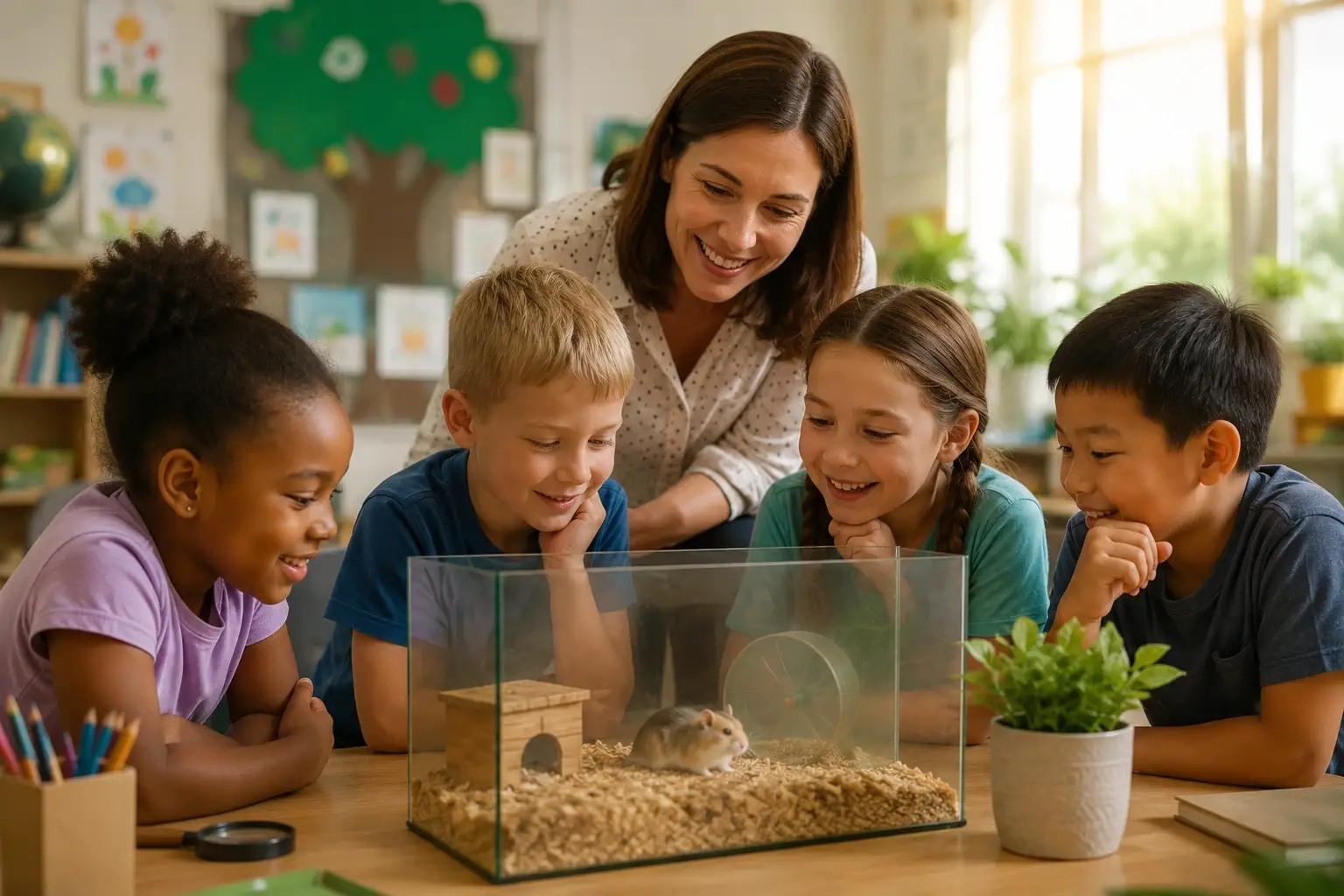
Pets in the Classroom is an educational grant program established by the Pet Care Trust, a nonprofit foundation, to provide financial support to teachers who want to introduce or maintain a class pet. Since its inception in 2010, the program has issued hundreds of thousands of funding opportunities to teachers across the U.S. and Canada, though the exact total changes as new awards are issued, so check the official site for the current figure.
The program’s mission is simple: give children the opportunity to interact with pets, an experience that can shape their lives for years to come. The Pet Care Trust also runs Dogs in the Classroom, which brings screened therapy dog teams into schools for visits rather than a permanent classroom animal.
Why Classroom Pets Matter
A classroom pet does more than sit in a tank or cage, it becomes part of the learning environment. Teachers who have participated in the program consistently report that a class pet helps with:
- Empathy and compassion
- Student responsibility
- Student engagement and participation
- Social skills and communication
- Self-esteem and confidence
- Attendance
- Reduced anxiety and stronger emotional well-being
Example: One elementary teacher shared that a classroom rabbit taught students to lower their voices and move gently, a practical, everyday lesson in empathy that no worksheet could replicate.
Benefits of Classroom Pets for Students
Beyond emotional development, class animals support academic and social growth:
Benefit Area |
What It Looks Like in Practice |
|---|---|
Social-emotional learning
|
Students regulate emotions while caring for a pet
|
Critical thinking
|
Observing habitat needs, feeding schedules, behavior
|
Teamwork
|
Rotating pet care responsibilities as a class
|
Communication skills
|
Explaining care routines to peers or substitute teachers
|
Classroom management
|
A shared responsibility that reinforces routines
|
Academic engagement
|
Lessons built around observation and biology
|
Key takeaway: Classroom pets are a low-cost, high-impact tool for social-emotional learning and hands-on science education, when the classroom is prepared to care for them responsibly.
What Does the Grant Cover?
Based on the program’s published options, funding can go toward:
- A new classroom pet
- Habitat setup (tank, cage, or enclosure)
- Pet food and ongoing supplies
- Maintenance of an existing classroom pet through a sustaining award
Grant types include:
- store account grants (redeemable at participating retailers)
- rebate grants (reimbursement for local pet store purchases)
- sustaining grants for teachers who already received an initial grant
- Maintenance of an existing classroom pet through a sustaining award
Available Grant Amounts
Grant |
Who Can Get It? |
What You Receive |
|---|---|---|
Initial Grant
|
Available once per educator’s lifetime
|
Choose one option from the grants below
|
Pet Store Coupon Grants
|
Eligible educators receiving an initial grant
|
Coupons from one of these stores: Petco, PetSmart, Pet Supplies Plus, or Petland
|
Small Animal Rebate Grant
|
Initial grant option
|
Up to $75 rebate for a small animal
|
Fish/Amphibian/Reptile Rebate Grant
|
Initial grant option
|
Up to $125 rebate for fish, amphibians, or reptiles
|
Betta Fish Rebate Grant
|
Initial grant option
|
Up to $75 rebate for a betta fish
|
Sustaining Grant
|
Available every school year after receiving an initial grant
|
$50 annual grant
|
Always verify current funding amounts on the official website, since these figures are subject to change each school year.
Types of Animals Commonly Supported
Eligible pets generally fall into a few categories:
Category |
Examples |
|---|---|
Small mammals
|
Guinea pigs, hamsters, gerbils, mice, rabbits
|
Fish
|
Classroom aquariums
|
Reptiles & amphibians
|
Bearded dragons, geckos, turtles
|
Birds
|
Budgies, cockatiels
|
Before choosing an animal, review your school’s policies, check for student allergies, and confirm the pet is legal to own in your state or province.
Classroom Pet Readiness Checklist
- Confirmed the animal is legal in your state/province
- Checked for student allergies
- Identified habitat space in the classroom
- Reviewed school and district pet policies
- Reviewed school and district pet policies
- Budgeted for ongoing food and supply costs
Who Can Apply?
The program is generally open to:
- Teachers (Pre-K through 12th grade)
- Public and private school educators
- School districts supporting classroom programs
Some program materials have also noted that librarians, guidance counselors, school nurses, and similar school-based staff may qualify, while in-home daycares and homeschools typically do not. Eligibility criteria are updated periodically, so confirm current rules before applying.
Eligibility Requirements
Applicant Type |
Typically Eligible? |
|---|---|
Public school teacher, Pre-K–12
|
Yes
|
Private school teacher, Pre-K–12
|
Yes
|
School librarian / counselor / nurse
|
Often yes
|
Homeschool educator
|
Generally no
|
In-home daycare provider
|
Generally no
|
How to Apply for the Pets in the Classroom Grant
Step 1: Create Account
Visit the official Pets in the Classroom website and create an account.
Step 2: Upload Documents
Verify your email and upload proof of employment (such as a school badge or paystub).
Step 3: Review Eligibility
Review program information on eligibility, grant types, and eligible pets. Use grant research services to find relevant funding opportunities, understand grant requirements, and identify programs that align with your pet’s needs and eligibility criteria.
Step 4: Choose Your Grant Type
Choose your grant type: store account, rebate, or sustaining grant.
Step 5: Submit the Application
Complete and submit the application with the required details. Get assistance through grant submission support to review application requirements, ensure accuracy, and improve the submission process.
Step 6: Wait for Approval
Wait for approval, processing times vary, so check the site for current timelines.
Step 7: Purchase Your Pet
Once approved, purchase your pet and supplies through the selected retailer or with your rebate.
Step 8: Apply for Upcoming Grant Opportunities
Apply for a sustaining grant in future years to help maintain the pet.
Grant Application Checklist
- Account created and email verified
- Proof of employment ready to upload
- Grant type selected (store, rebate, or sustaining)
- Application form completed accurately
- Confirmation of submission saved
- Retailer or rebate receipts kept for reimbursement, if applicable
How Professional Grant Writing Services Can Increase Your Funding Success
Many classroom grants are simple to apply for, but larger education funding opportunities often involve competitive review processes, detailed project narratives, measurable outcomes, evaluation plans, and carefully prepared budgets. Even excellent ideas can be overlooked if an application doesn’t clearly address a funder’s priorities.
Professional grant writing services help bridge that gap. An experienced grant writer understands what reviewers look for and how to present your project in a way that is clear, persuasive, and fully compliant with the funding guidelines. Rather than simply editing your application, they help transform your vision into a competitive proposal backed by evidence, realistic planning, and well-defined outcomes.
- Identifying grants that match your class, school, or district goals
- Developing a compelling, evidence-based project narrative
- Creating realistic budgets and budget justifications
- Defining measurable objectives and expected outcomes
- Organizing supporting documents and required attachments
- Reviewing proposals for compliance before submission
- Strengthening applications to improve competitiveness
At Grant Writing Company, we work with educators, schools, and nonprofit organizations seeking funding for classroom resources, STEM initiatives, special education, after-school programs, and other educational initiatives. Our grant experts’ team provides grant research, grant proposal development, application review, and strategic guidance tailored to each funding opportunity.
Grant Requirements
Applicants should be prepared to provide:
- Proof of current teaching or school employment
- Basic classroom and school information
- Selected grant type and animal choice
- Receipts or proof of purchase (for rebate or sustaining grants)
Documentation rules can change year to year, so always verify current requirements on the official program website.
Classroom Pet Care & Safety
Responsible pet ownership is central to the program’s mission. Before bringing an animal into the classroom, plan for:
- Habitat setup appropriate to the species
- A regular feeding and cleaning schedule
- Veterinary care as needed
- Hygiene practices (handwashing after handling)
- Allergy considerations for students and staff
Classroom Safety Checklist
- Handwashing station or sanitizer near the habitat
- Clear rules for handling the animal
- Escape-proof enclosure
- Emergency care plan if the pet becomes ill
- Substitute teacher instructions for daily care
Educational Benefits of Classroom Pets
Classroom animals naturally support STEM and science education by giving students a living case study in biology, ecosystems, and responsible care. Pairing a classroom pet with structured lesson plans, many of which the Pets in the Classroom website offers free, turns observation time into measurable learning.
Lesson Integration Framework
- Observe: students record daily behavior
- Connect: link observations to a science standard
- Reflect: journal about responsibility and care
- Apply: extend lessons into at-home pet care conversations
Our Experience With Education Grant Applications
Grant Writing Company has reviewed and prepared a wide range of education grant applications over the years, and a few patterns show up consistently — regardless of the specific program.
Strongest applications make the reviewer's job easy
Reviewers are often working through a stack of submissions on a deadline. Applications that state the need, the plan, and the outcome clearly, without making the reviewer hunt for it, tend to score better simply because they’re easier to evaluate.
First few pages matter more than people expect
Reviewers form an impression early, and that impression shapes how generously they read everything that follows. A strong opening earns the benefit of the doubt on the details later in the application.
Generic applications are obvious
Experienced reviewers read hundreds of submissions and can spot recycled language almost immediately, including vague goals, boilerplate phrasing, or a narrative that could describe any classroom rather than this classroom. Specificity is what separates a memorable application from a forgettable one.
Small inconsistencies destroy confidence
A budget number that doesn’t match the narrative, a timeline that contradicts itself, or a typo in a key figure can make a reviewer question the rest of the application, even when the underlying project is sound.
Every sentence should help a reviewer assign points
Most grant applications are scored against a rubric, whether or not that rubric is published. Sentences that don’t map to eligibility, need, impact, or feasibility are often just taking up space that could be used to make the case stronger.
Local knowledge is a competitive advantage
Understanding a specific district’s priorities, a state’s education funding landscape, or a community’s needs allows an application to speak directly to what a reviewer already cares about, rather than relying on generic language that could apply anywhere.
These are the same principles we bring to classroom and education funding applications more broadly, to help educators put their strongest, clearest case forward.
Tips to Increase Your Chances of Approval
- Clearly explain the educational purpose of the pet in your classroom
- Show a realistic budget and care plan
- Describe how the pet supports specific learning goals
- Demonstrate a sustainability plan for holidays and summer break
Common Mistakes to Avoid
- Submitting an incomplete application
- Choosing a pet without checking school policy or allergies
- Underestimating ongoing supply costs
- Vague educational justification with no clear classroom goal
Avoiding these common mistakes can help you create a stronger, more effective grant application. For additional tips on recognizing and preventing common errors, explore our guide: Top Grant Writing Mistakes and How to Avoid Them.
Alternatives to Pets in the Classroom Grants
Grant |
Who Can Apply |
Funding Purpose |
|---|---|---|
Teacher grants (general)
|
Individual teachers
|
Classroom materials/supplies
|
Education grants
|
Teachers, schools
|
Broad instructional needs
|
STEM education grants
|
Teachers, schools
|
Science/tech classroom projects
|
School improvement grants
|
School districts
|
Facility/program upgrades
|
Nonprofit education fundings
|
Educational nonprofits
|
Program-specific funding
|
Understanding the different funding opportunities can help you find the right fit for your classroom needs. Learn more in our guide: Types of Grants Available in the US. Funding amounts and terms vary widely and change often, always verify the latest information on each grant’s official website before applying.
Conclusion
The Pets in the Classroom Funding provides teachers with an opportunity to create a more engaging, hands-on learning environment by bringing the benefits of classroom pets to their students. Beyond providing financial support for animals, habitats, and supplies, the program helps educators introduce valuable lessons in responsibility, empathy, teamwork, and science through real-world experiences.
A successful classroom pet program begins with careful planning. Teachers should choose an appropriate animal, understand school policies, prepare a realistic care plan, and clearly connect the pet to educational goals. While the grant application process is designed to be accessible for educators, staying informed about current eligibility requirements, funding options, and application guidelines is essential.
Whether you are introducing your first classroom pet or maintaining an existing one, the Pets in the Classroom Grant can help make animal-assisted learning more accessible and sustainable. By combining responsible pet care with purposeful instruction, teachers can create meaningful experiences that positively impact students throughout the school year.
Need Help With Education Grant Applications?
Preparing a strong application often takes more than filling out a form, it means demonstrating educational value and readiness clearly. Grant Writing Company helps educators research funding opportunities, review eligibility, and prepare well-organized applications for broader classroom and education grants.
Contact Grant Writing Company to talk through your next funding opportunity.
Frequently Asked Questions
What is the Pets in the Classroom Grant?
It’s an educational grant program from the Pet Care Trust that gives teachers financial support to purchase and maintain a classroom pet.
Who can apply?
Generally, Pre-K through 12th-grade teachers in public and private schools in the U.S. and Canada. Some school staff, like librarians or counselors, may also qualify.
Are private schools eligible?
Yes, both public and private school teachers have historically been eligible.
Are homeschool teachers eligible?
Program materials have generally excluded homeschools and in-home daycares, confirm current rules on the official site.
What animals are eligible?
Common eligible pets include small mammals like guinea pigs and hamsters, fish, reptiles such as bearded dragons and geckos, and some birds.
What is a sustaining grant?
A sustaining grant is available to past recipients to help maintain an existing classroom pet or replace one, typically applied for annually.
Can existing classroom pets qualify for funding?
Yes, sustaining grants are designed specifically for teachers who already have a classroom pet.
How do I apply?
Create an account on the official Pets in the Classroom website, complete the application, and select your preferred grant type.
How long does approval take?
Processing times vary and are not guaranteed, check the official site for current timelines.
Is professional grant writing worth it for education funding?
Yes, to make it more competitive, a grant writer can help strengthen the documentation and narrative.
Note: This guide is for informational purposes only. Grant details, eligibility requirements, deadlines, and funding availability may change at any time. Always verify the most current program information through official sources before making any business or funding decisions.
Need Help?
Contact our grant writing experts today to get your right Professional Grant Writer
Newsletter
Latest Post
-
Pets in the Classroom Grants: How Teachers Can Apply for Funding in 202623 Jul 2026
-
 Baltimore Children & Youth Fund (BCYF): Eligibility, Grant Application Process, Funding Priorities & Opportunities (2026 Guide)22 Jul 2026
 -
Soroptimist Live Your Dream Awards: Eligibility, Award Amounts, Application Process & Tips for Success (2026 Guide)21 Jul 2026